
Gutters Full of Weeds or Seeds? Birmingham Clearing Guide
A gutter with grass, moss or a small shrub growing out of it looks neglected, and it tends to prompt a slightly embarrassed glance from the pavement. But the untidy look is the least of it. Plants only grow in a gutter once something else has already gone wrong: debris has been sitting there long enough to turn into a growing medium, and water has been held in the channel long enough to keep it damp. The weeds are the visible evidence of an underlying problem, and some of them go on to cause problems of their own.
This guide is about that specific situation. It covers why plants grow in gutters at all, which ones turn up most often (including one in particular that deserves to be taken seriously), what roots do to the gutter and the building behind it, how to clear plant growth without causing damage, and what genuinely stops it coming back. If you're looking for the wider picture of how to spot trouble early, our blocked gutters checklist covers it, and our guide to stopping gutters blocking again covers prevention products in detail. This one is about the plants themselves.
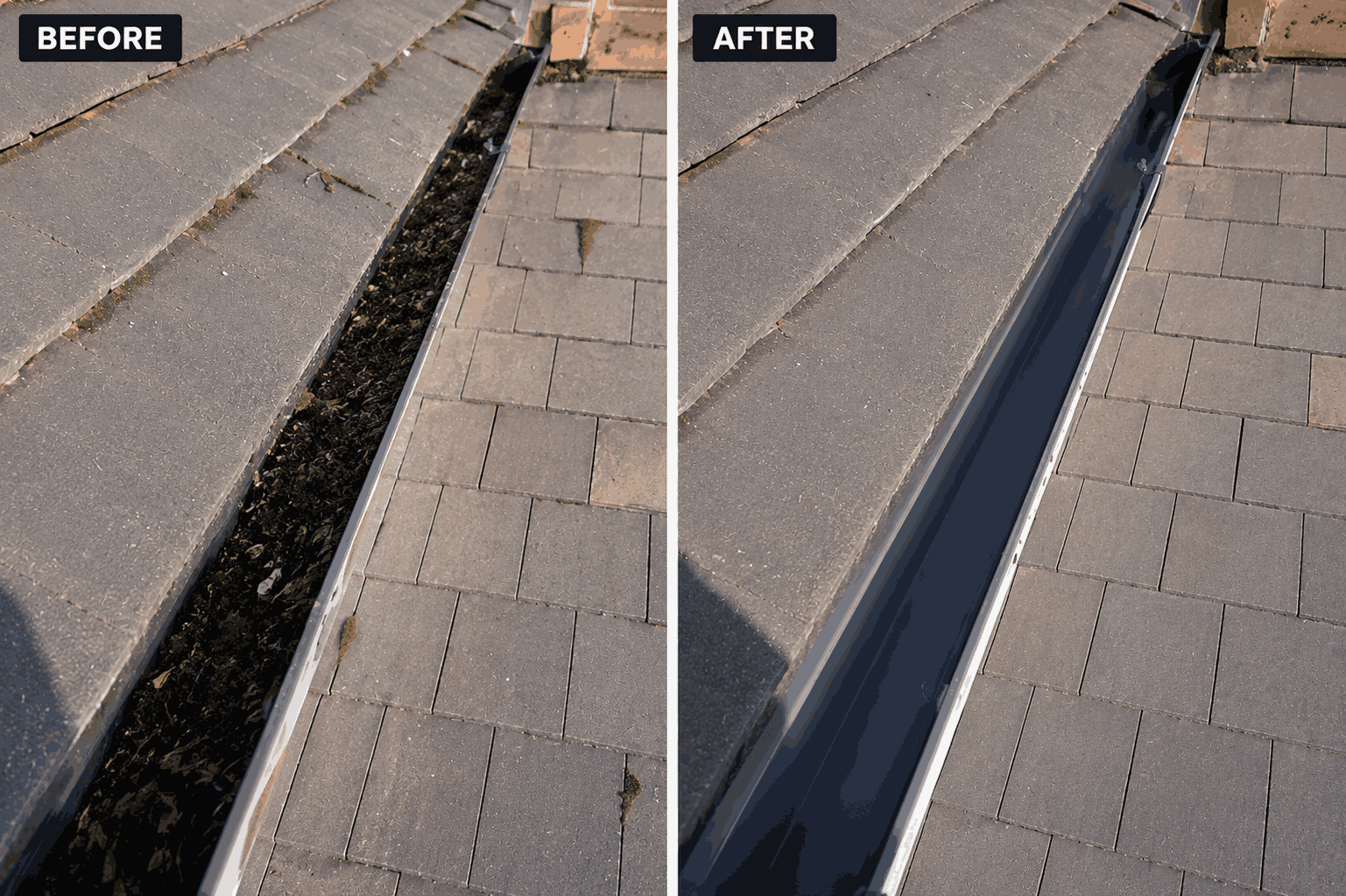
Why weeds grow in gutters, root damage mechanisms, buddleia removal, and vacuum extraction methods across Birmingham.
Why Plants Grow in Gutters at All
A gutter isn't a natural growing environment, but it provides most of what a seedling needs once a few conditions are met:
1. A growing medium
Leaves, silt, roof grit and general debris settle in the channel and slowly break down. Over months, a layer of decomposing material builds up that behaves very much like thin, nutrient-rich soil.
2. Moisture
A gutter that doesn't drain fully, because of a slight sag, a partial blockage or a downpipe that's slow to clear, stays damp between rain events. That's exactly what germinating seeds need.
3. Shelter
A gutter sits against the building, out of the worst of the wind and often warmed slightly by the roof above, which makes it a gentler environment than open ground.
4. A steady supply of seed
Wind carries seed from trees, shrubs and wild plants for considerable distances, and birds drop more. A gutter is simply a trap that catches whatever lands.
Take away any one of these and plants struggle. That's why weeds in a gutter are such a reliable indicator: they only appear where debris has been left undisturbed and water has been left standing, which is the same combination that causes overflow, damp and sagging. A property whose gutters are cleared and draining regularly rarely has a plant problem at all.
The distinction between growth that's merely resting on top of the debris and growth that has actually rooted into it matters too. Rooted plants mean the debris has been there for weeks or months, not days, which is why our checklist treats rooted growth as one of the clearer signs that a gutter needs attention.
What's Actually Growing — A Practical Field Guide
Not everything that grows in a gutter is equally concerning. In rough order from least to most worrying:
1. Moss and algae
By far the most common, and the least threatening on its own. Moss forms a damp, spongy mat that holds moisture against the channel and traps more debris, so it contributes to blockage and to the damp that keeps everything else growing. It often arrives from the roof above, which is why roof cleaning and moss removal is worth considering alongside a gutter clear when moss keeps returning.
2. Grasses, dandelions and other small herbaceous weeds
Short-lived, shallow-rooted and easy to pull when small. They're a sign of a well-established debris layer, and they add to it when they die back, but they rarely cause structural damage by themselves.
3. Ferns and opportunists on older masonry
On older brick and stone buildings, ferns and similar plants sometimes establish at the back of a gutter or along a parapet where mortar has softened and moisture is constant. They're a signal that the wall behind is staying wet, which is worth investigating.
4. Tree seedlings (sycamore, ash, birch)
Sycamore, ash, birch and similar trees produce huge volumes of winged seed that lands in gutters and germinates readily in the debris layer. A seedling a few centimetres tall is easy to remove. Left for a year or two, it develops a proper root system that grips the channel and can start to push at joints and brackets.
5. Buddleia — The bush that destroys masonry
The one that needs the most attention, covered in its own dedicated section below. It is the plant most associated with building damage in the UK, and gutters are one of the places it most commonly gets started.
Buddleia — The One to Take Seriously
Buddleia (Buddleja davidii), the butterfly bush, is a familiar garden shrub and one of the most successful colonisers of built environments in Britain. You'll see it growing out of railway embankments, chimney stacks, parapet walls and, very often, gutters.
A few points matter for anyone dealing with it:
- Needs very little to get started: It's a fast-growing, woody shrub that's widely naturalised across the UK, and it establishes in very small cracks and gaps with almost no soil. A layer of decomposing debris in a gutter is more than enough.
- Spreads by wind-blown seed: A mature plant produces seed in vast quantities, which is why one overlooked bush can seed the gutters, walls and chimneys of several neighbouring properties. Specialists note that the easiest way to control it is to stop the seeds being dispersed.
- Its roots do real damage: Once established, the woody roots exploit cracks and weak points, and removal specialists report that they grow into walls, guttering and foundations, widening gaps in brickwork and mortar and letting water in.
- Isn't a legally controlled species: Unlike Japanese knotweed, buddleia isn't currently listed as a controlled species in UK law, so there's no legal duty to remove it from your own property. It's still a plant worth removing from a gutter because of what it does to the structure.
- Small seedlings are easy; established plants aren't: Advice commonly given to homeowners is to remove seedlings promptly by hand while they're small, roots and all, and to seek advice before tackling a larger plant rooted into masonry.
In a gutter, the practical rule is simple: if it's a small seedling, it comes out now; if it's a woody shrub with a thick stem, it needs a proper, careful removal and a check of what it has done to the gutter and the fascia behind.
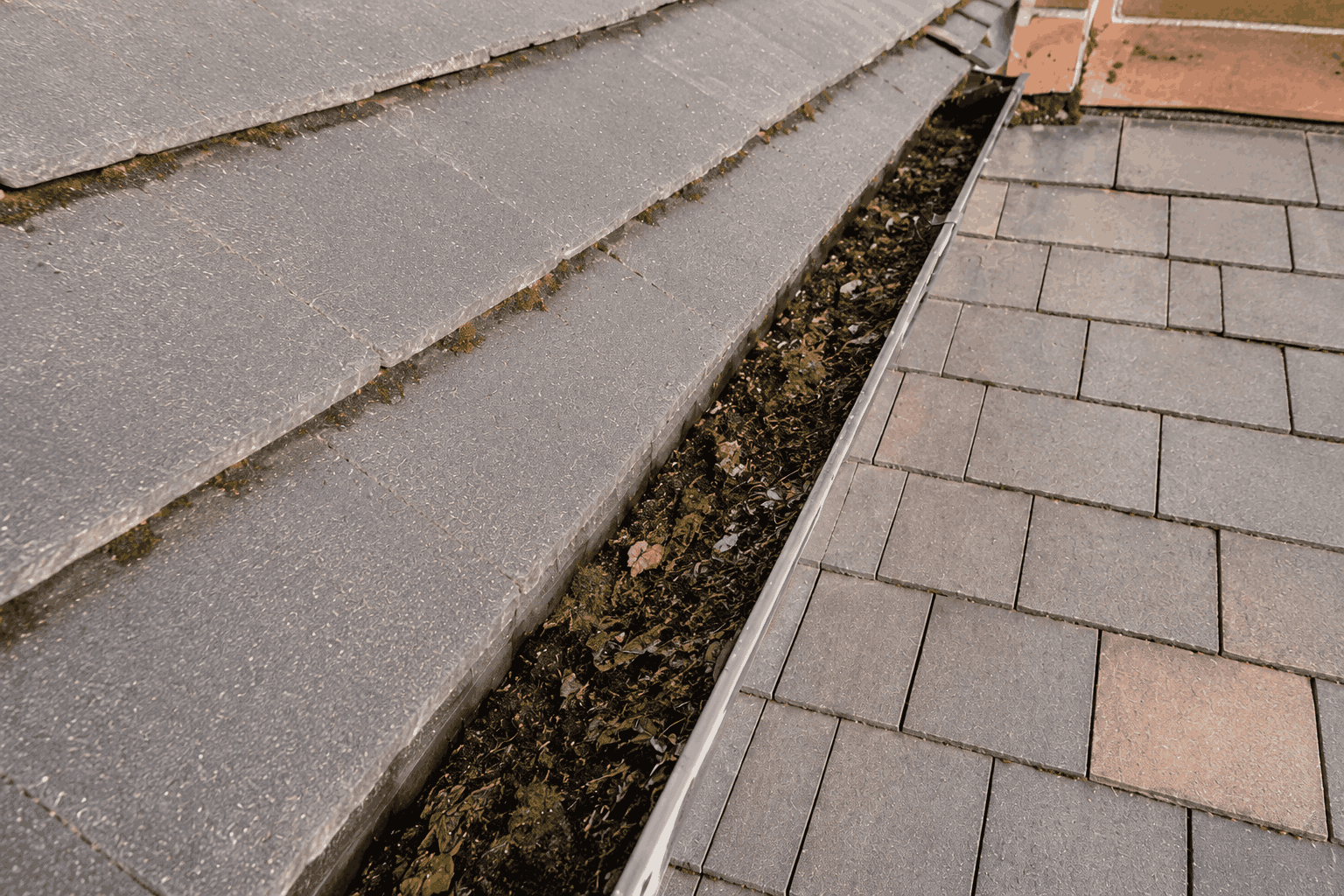

What the Roots Actually Do to a Gutter and the Building Behind It
It's worth being specific, because “roots cause damage” sounds vaguer than the real mechanisms:
Joints get pushed apart
Roots follow moisture and exploit any gap. In a gutter, that means the joints between sections, where a root can slowly widen the gap and break a seal. This is one way a clear, well-fitted gutter ends up with a leak that looks like a joint failure but whose real cause is a plant.
Brackets loosen
The weight of established growth, plus the weight of the debris and water it holds, drags on brackets and fixings. A bracket that has been pulling for months eventually gives, and the gutter sags or pulls away.
The channel itself can be damaged
On older or thinner uPVC, and particularly on cast iron where paint has already failed, the roots and the constant dampness around them accelerate cracking and corrosion.
Water gets trapped against the fascia
A mat of roots and damp debris holds water against the fascia board and the roof edge, which is the beginning of timber decay as described in our guide to hidden damage from blocked downpipes. If staining or softness is already visible, fascia and soffit cleaning and inspection is the natural next step.
Roots can reach the downpipe
Seeds and seedlings that start at the outlet send roots down into the pipe itself, creating exactly the sort of restriction covered in our guide to blocked downpipe signs.
Roots work into masonry mortar
Where a gutter is built into brickwork, as on many older terraces, buddleia and tree seedlings can start in the gutter and then follow cracks into the wall.
None of this happens overnight, which is exactly why catching plant growth early matters so much. A seedling and a shrub can occupy the same spot a couple of years apart, with a very different cost of putting right whatever it has done.
The Plants Are a Symptom — Look at What's Underneath
When a gutter is full of weeds, the temptation is to treat it as a gardening job: pull the plants and move on. But the plants are the top layer of a larger problem, and the useful question is what sits underneath them:
- A deep layer of compacted debris: This is the growing medium. If only the plants are removed and the debris stays, new seed will germinate in it within weeks.
- A reason water isn't draining: Standing water points to a sag, a blocked outlet or a slow downpipe, and those need fixing or the same conditions will recreate themselves.
- Possible damage already done: A gutter that has carried established plants for a long time should be checked for cracks, separated joints, loosened brackets and stained or soft fascia before anyone assumes a simple clear is all that's needed.
That's why a proper visit treats weedy gutters as a full clear-and-inspect job, not a quick tidy. The plant removal is part of it; the assessment of what's beneath is the more valuable part.
Safe Removal — What to Do and What to Avoid
For anyone dealing with a small amount of growth at a safe, low-level gutter, or for understanding what a professional should be doing, these are the sensible principles:
What Works Well
- •Removing small seedlings early by hand: The smaller the plant, the easier it comes out cleanly without gripping.
- •Clearing the debris layer completely: Take out decomposing silt so there's nothing left to germinate in.
- •Being gentle with old fittings: As covered in our Victorian gutters guide, pulling hard on cast iron can crack old joints.
- •Checking the downpipe outlet: Ensure every visit will check and clear the downpipe so dislodged seeds don't relocate.
What to Avoid
- •Climbing ladders above single storey: See our two-storey safety guide for why ground extraction is far safer.
- •Pouring weedkiller into gutters: Chemical run-off contaminates drainage system pipes; woody plants need direct cut-stump treatment.
- •Assuming rain will wash it away: Rooted growth holds debris tight against the channel.
- •Cutting tops off: Leaving roots behind guarantees rapid regrowth from the stem base.
- •Yanking growth from masonry: Pulling established roots out of brickwork can bring mortar with it.
What Vacuum Clearing Does With Weedy Gutters
A ground-based gutter vacuum system deals with plant-filled gutters well, with a few things worth knowing about:
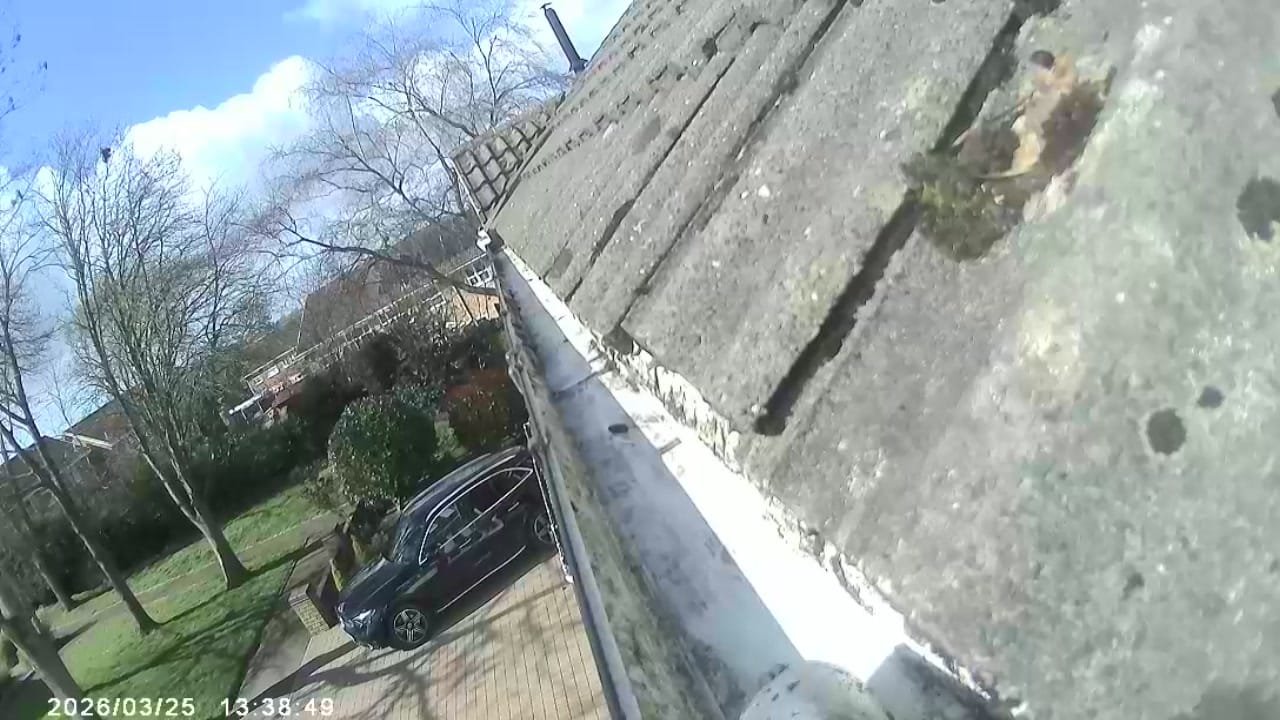
Camera view shows real condition
A live view inside the channel shows how deep the debris is, whether growth has actually rooted, and whether there's any damage beneath it. That's far more informative than a glance from the ground.
Loose and shallow growth comes out cleanly
Moss, small weeds and the debris layer they're rooted in are drawn straight out into a sealed container, with nothing dropped onto the garden or patio below.
Matted growth may need agitating first
Dense root mats and established seedlings sometimes need loosening before they'll come away. This is one of the reasons a neglected gutter takes longer to clean than a maintained one.
Woody shrubs may exceed vacuum suction
A thick-stemmed shrub rooted into masonry needs careful, deliberate manual removal, and sometimes specialist treatment, not just suction. An honest provider will say so.
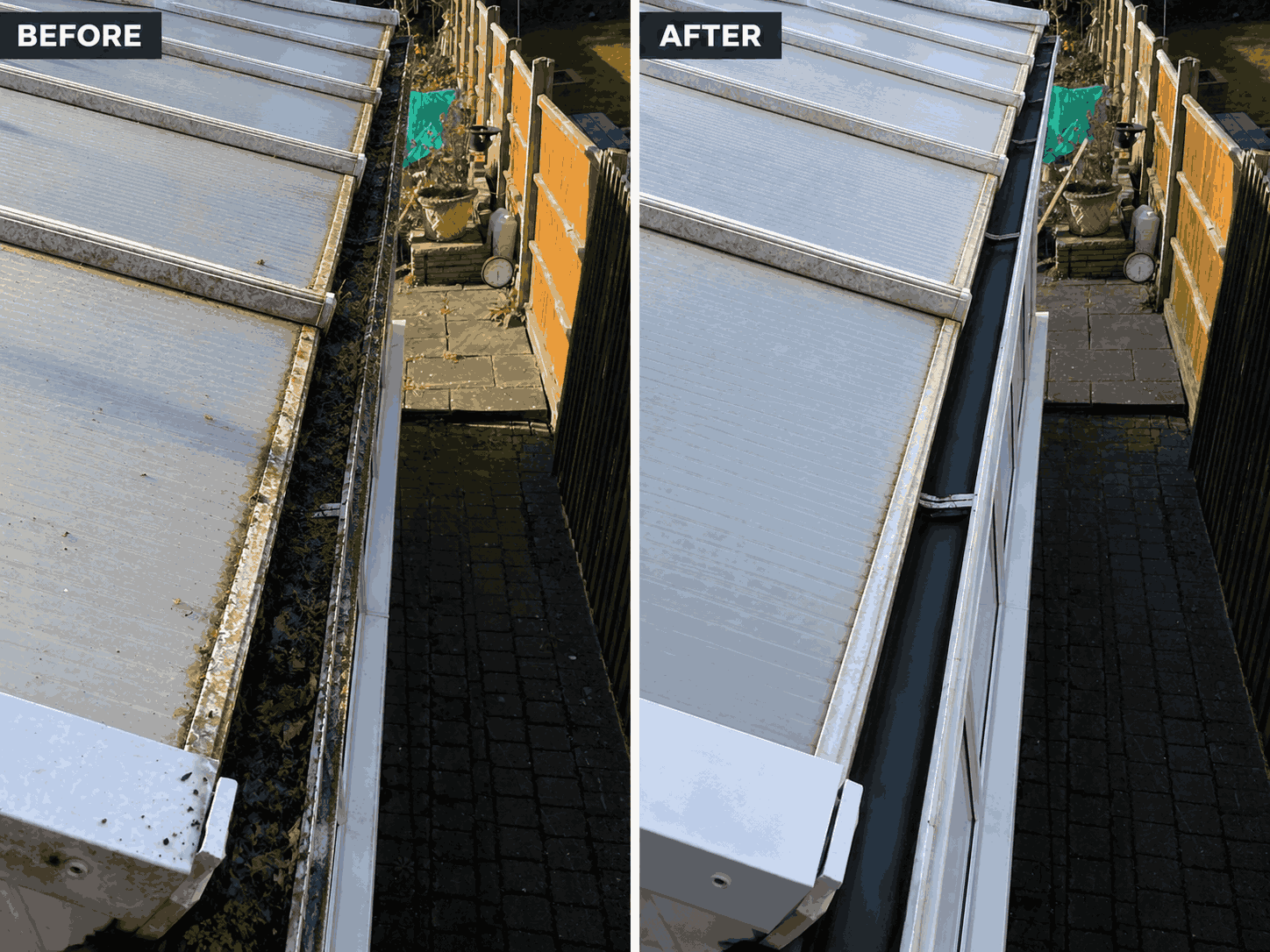
Before-and-after photo proof
For a gutter that looked like a hanging garden, a clear before-and-after photo record makes the difference unmistakable and gives you a baseline for next time.
Roots Left Behind and Seeds Still Waiting
Clearing the plants is not the end of the story, because two things remain:
Root fragments
Many gutter weeds will regrow from root left in the debris or in any crack in the channel. A thorough clear removes as much root mass as possible, but a quick check a few weeks afterwards catches anything that restarted.
Seed banks
A gutter that grew weeds collected a good deal of seed. Fresh seed keeps arriving from nearby trees. If the channel stays clear and drains properly, seed that lands has nothing to germinate in and washes through.
Stopping It Coming Back
What genuinely reduces recurrence is anything that stops debris building up and water standing:
- A regular clearing schedule: A gutter cleared before debris turns into growing medium rarely sprouts anything. As explained in our timing guide, properties near mature trees need strategic clearing schedules.
- Fixing whatever holds water: A sag, misaligned section or slow downpipe keeps the channel damp. Correcting it removes the conditions, not just the plants.
- Guards chosen carefully: As covered in our guide to gutter protection, independent testing shows rigid mesh guards interfere least with flow while preventing leaf accumulation.
- Dealing with the source plant: If buddleia is the culprit, cut back plants on your own land and manage nearby seeding sources.
- Roof moss management: Treating the roof breaks the cycle by stopping moss spores constantly washing down into the gutters.
When Weeds Point to Something Bigger
Plant growth in a gutter should prompt a closer look in several situations:
Growth on a flat roof or its outlets
Weeds around a scupper or internal outlet block drainage and cause ponding, as covered in our flat roof drainage guide.
Growth along with a visible sag
A gutter holding both water and weeds has usually sagged, and the sag will keep recreating the problem until corrected.
Growth at outlet or in downpipe
Roots in the pipe are a far more serious restriction than surface weeds in the channel.
Growth plus recurring overflow
If a gutter keeps overflowing and sprouting plants, our overflow triage guide helps work out whether the cause is a blockage, downpipe or capacity.
Where Weedy Gutters Show Up Most Across Birmingham
Victorian terraces with parapet & box gutters
Built into masonry and hard to see from the ground, these collect debris for years — exactly where tree seedlings and buddleia take hold.
Garages, outbuildings and rear extensions
The least-looked-at roofs on most properties, making them the most likely to be overgrown.
Industrial units, warehouses & railway-adjacent sites
Buddleia is associated with railway land and urban ground. For larger premises, commercial gutter maintenance catches this before structural damage occurs.
Empty and void rental properties
Vacant building gutters go unmonitored. As explained in our landlord gutter cleaning guide, exterior maintenance is a legal obligation under Section 11.
A Quick Guide to How Urgent It Is
Myths About Weeds in Gutters
"It's just cosmetic."
Plants only grow where debris and water have been left undisturbed. Established roots can damage joints, brackets and fascia.
"The rain will clear it."
Rooted growth doesn't wash out; it holds more debris and slows drainage.
"A bit of weedkiller will sort it."
Chemicals run straight into the drainage system, fail to remove the debris layer, and are inappropriate for woody plants.
"If I cut it back it's dealt with."
The root remains, and most plants regrow rapidly from the root base.
"Tiny seedlings can wait."
Seedlings get harder to remove every month as root systems expand.
"Only neglected houses get this."
A single missed year near a seeding tree is enough for weeds to establish.
Weedy Gutter Clearing Across Birmingham and the West Midlands
Plant-filled gutters turn up wherever debris is left undisturbed, so the same approach applies across Birmingham, Solihull, Sutton Coldfield, Wolverhampton, Walsall, Dudley and West Bromwich. What differs locally is the seed source and property type. A good clearing visit adapts to each and ensures engineers check and clear the downpipes as well as the gutters.
Frequently Asked Questions
Related Reading in This Series
How Do You Know If Your Gutters Are Blocked? Birmingham Homeowner's Checklist

How Do You Stop Gutters From Blocking Again? A West Midlands Fix Guide
Leaking Gutter Repair Birmingham: Fix or Replace?

How Do You Know If Your Downpipe Is Blocked? Signs Birmingham Homes Show
Gutter Vacuum Cleaning Birmingham – No Ladders Needed
Flat Roof Gutters in Birmingham: The Maintenance Problem Most Guides Ignore

Why Victorian Homes in Birmingham Need a Different Gutter Cleaning Approach
The Hidden Damage Behind Every Blocked Downpipe in Solihull

Overflowing Gutters in Birmingham? Causes & Quick Fixes

Gutter Cleaning for Landlords & Letting Agents Birmingham

How Long Does a Professional Gutter Clean Take in Birmingham?

How Do You Clean Gutters on a Two-Storey House in Birmingham Safely?
Weeds, Moss or Seedlings in Your Gutters?
Book a ground-based clear across Birmingham and the West Midlands: the debris layer removed, downpipes checked, any damage reported honestly, and before-and-after photos as proof.