
Getting Ready for Autumn in the West Midlands: A Pre-Season Gutter Preparation Timeline
Autumn doesn't arrive all at once. It arrives tree by tree, over roughly eight to ten weeks, starting with one species most people don't expect and finishing with two that most people assume drop first.
Understanding that sequence — rather than treating "autumn" as a single event on the calendar — is the difference between a gutter clear that actually covers the season and one that's a few weeks too early or too late to matter.
This guide sets out exactly when different common trees across Birmingham and the West Midlands typically shed, and builds a practical preparation timeline around it, rather than a generic "clean your gutters in October" instruction.
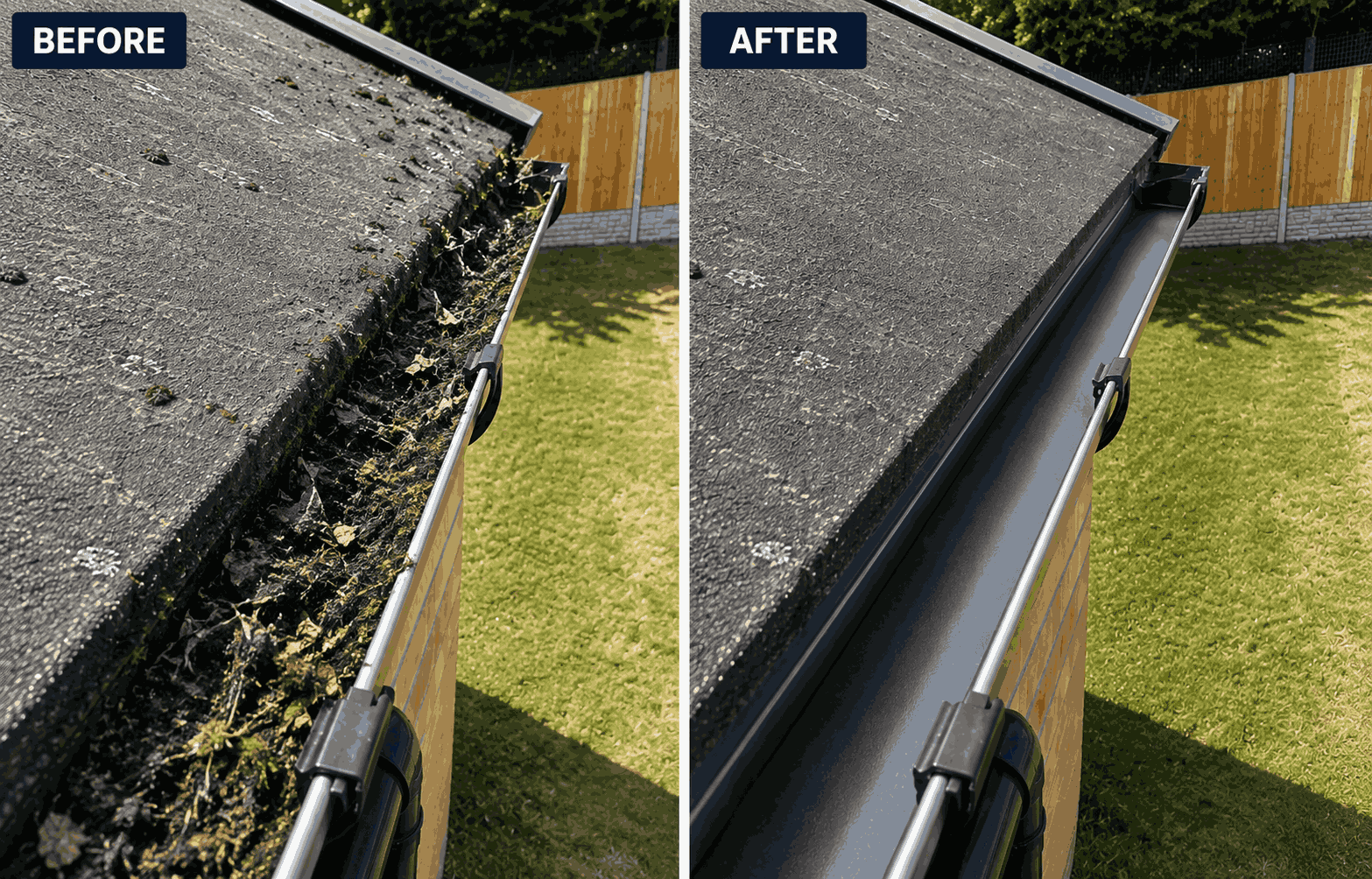
Staggered deciduous leaf drop across Birmingham & the West Midlands requires structured pre-season planning.
Autumn Doesn't Start With Oak and Sycamore — It Starts With Horse Chestnut
Most people picture autumn leaf fall as oak and sycamore turning brown together in October. In practice, long-running UK leaf-fall monitoring shows a much earlier and more staggered pattern. According to observations from a nationwide tree-monitoring project affiliated with the Met Office, horse chestnuts are typically the first common tree to lose leaves, often starting in September — well before most homeowners are thinking about autumn gutter maintenance at all. Poplars and silver birches follow from around mid-October, with the fall gathering real pace in the last week of the month, frequently coinciding with the first frosts. Oak and sycamore are consistently among the last species to begin dropping, usually not starting in earnest until the final week of October.
This staggered pattern matters enormously for gutter maintenance timing, because it means:
A single gutter clear in early September will miss almost all of the oak, sycamore, poplar and birch fall that's still to come.
A single gutter clear left until late November may have already allowed weeks of horse chestnut debris to compact and start holding water.
Properties near a mix of species — extremely common across the West Midlands' mature suburban streets — face a genuinely extended risk window, not a single peak.
Why This Staggered Timing Matters Specifically for Birmingham and the West Midlands
The region's parks, gardens and street plantings include a heavy mix of exactly the species that drop leaves at different points across the season. Horse chestnut is a long-established favourite for parks and garden plantings across the region — the tree most associated with conkers in autumn — which means properties near mature parkland or older streets often start seeing debris well before the "main" autumn season most people picture. Sycamore is similarly widespread and, alongside oak, tends to be one of the last to drop, extending the risk window into November for properties near those species.
The Eight-Week Pre-Season Preparation Timeline
A practical, week-by-week schedule tailored to natural UK leaf fall cycles
Rather than a single date, a practical approach spreads attention across the period leaf fall actually happens:
If there's a horse chestnut nearby — in a garden, a neighbouring property, or a street planting — this is when debris can start appearing, often before anyone associates it with "autumn" at all. A quick visual check of gutters near these trees is worth doing now rather than waiting.
This is the window to book a full gutter clearing visit before demand peaks. Booking now, ahead of the main fall, secures a slot before October — which is consistently the busiest month for gutter clearing bookings across the region — and catches any accumulated horse chestnut debris before it compacts further.
Poplar and silver birch begin dropping in earnest during this period. For most properties, this is the single most useful two-week window for a full clear, since it catches the early-to-mid fall from the widest range of species before the heaviest volume arrives.
This is when oak and sycamore — often the species people picture first when they think "autumn leaves" — actually begin shedding in volume, frequently overlapping with the first frosts of the year. Properties near these species, or any property that had its main clear back in weeks 3–4, benefit from a second check here rather than assuming the earlier visit covered the whole season.
A final visual check is worth doing once the bulk of leaf fall has clearly finished, particularly ahead of the wetter winter months, to confirm nothing was missed and that downpipes are running clear before winter rainfall arrives in volume.
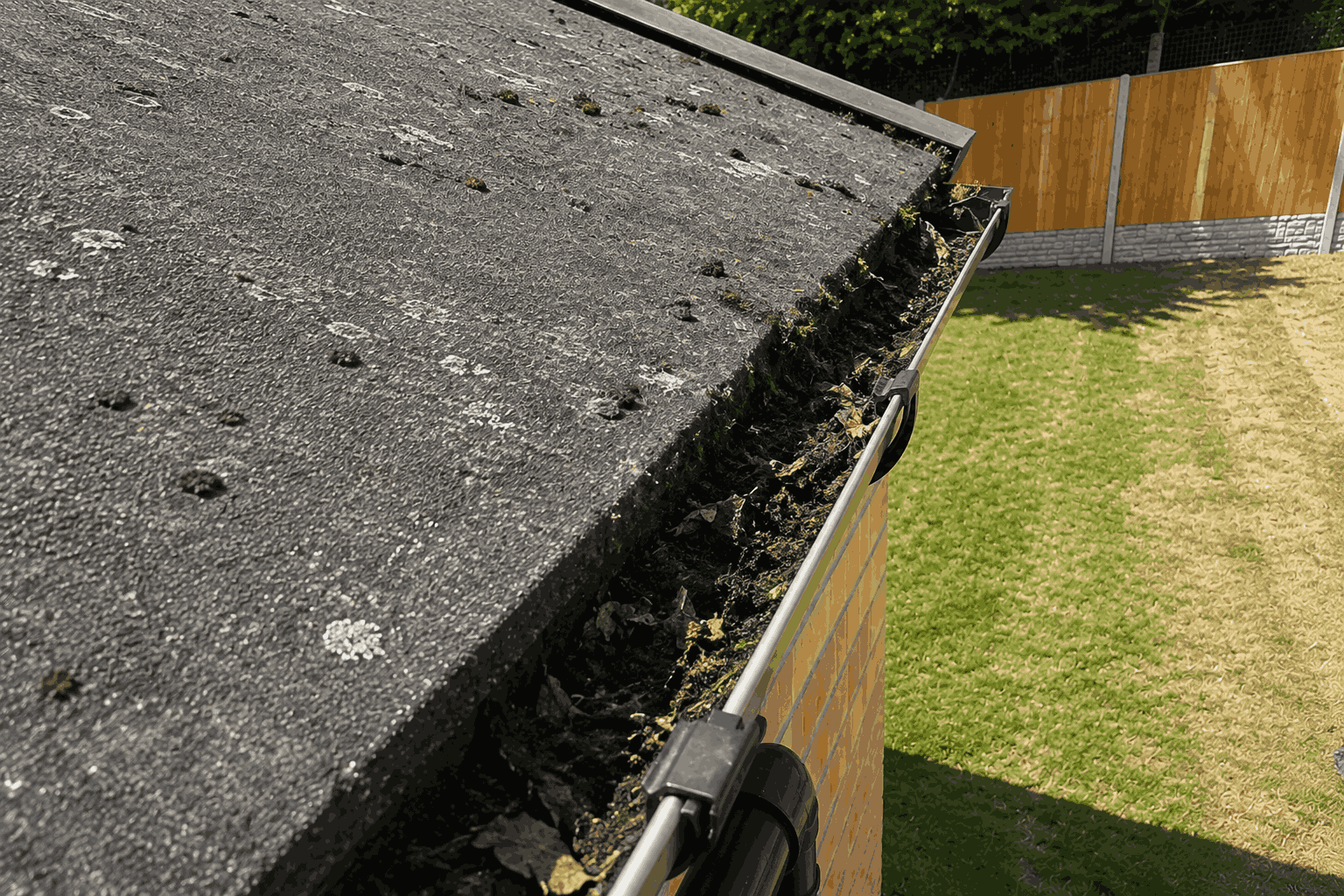
Autumn Gutter Cleaning: Before vs. After
See how high-powered ground-based vacuum suction extracts heavy autumn leaf compost, sludge, and downpipe restrictions before winter rain sets in.

Why "Just Book It for October" Misses Part of the Problem
The instinct to book a single autumn gutter clear "sometime in October" is understandable, but the species timing above shows why it's an incomplete plan on its own:
- Booked too early in October, and a property near mature oak or sycamore will still see significant leaf fall afterward.
- Booked too late in October, and a property near horse chestnut has already been carrying weeks of compacting debris.
- A single visit anywhere in October misses the ongoing accumulation from species that continue shedding into November.
This is exactly why a two-visit approach — an earlier check in September for early-shedding species, and a main clear timed for the peak window — tends to actually cover the season, rather than a single visit gambling on hitting the right week for every tree species nearby.
A Pre-Season DIY Inspection Checklist
Ground-level visual checks you can complete in under five minutes
Before booking anything, a five-minute visual check from ground level can establish where a property actually stands:
1. Check for visible sagging
Look up at the gutter line for any visible dip or sagging, which indicates heavy standing water already sitting somewhere in the run.
2. Spot greenery or moss
Check for greenery or moss growing along the gutter edge — a sign debris has been sitting long enough to start composting from a previous season.
3. Inspect ground under downpipes
Look at the ground beneath downpipes during or after light rain — dry patches point to an existing blockage further up the system.
4. Map nearby mature trees
Note which mature trees are within falling distance of the roofline — not just in the garden, but overhanging from neighbouring properties or the street.
5. Examine fascia boards for old staining
Check fascia boards for staining from last year, which often marks exactly where an overflow point developed previously and is likely to recur.
What a Proper Pre-Autumn Visit Should Include
A thorough pre-season visit should go beyond simply scooping out whatever's currently visible:
- Full debris removal from every gutter run, including sections that look clear from the ground but may be holding early-season debris further along.
- A downpipe check, since blockages at the bend are invisible from above and are a common cause of a gutter that looks clear but still overflows.
- Before and after photos, useful both as confirmation of the work and as a record for later reference if overflow happens after a subsequent storm.
- A quick note of any early wear — a loose bracket, a joint starting to separate — so it can be addressed before it becomes the cause of an overflow later in the season.
- Where properties are near heavy moss growth on the roof, a roof and moss check alongside the gutter clear, since moss shed from the roof surface accelerates how quickly gutters refill.
Why a Vacuum System Suits the Two-Visit Approach Well
Booking two visits across a season sounds like more effort than one, but a ground-based gutter vacuum system makes this genuinely practical rather than a hassle. Because there's no ladder setup and takedown involved, a shorter early-season check and a fuller peak-season clear can both be scheduled quickly, without the property needing extensive access preparation each time.
The system reaches up to four storeys from ground level, which covers the vast majority of residential and commercial properties across Birmingham and the wider region.
Property Type and Local Tree Mix Both Affect Timing
Two properties on the same street can have genuinely different ideal preparation timelines depending on what's actually growing nearby:
Near horse chestnut only
The early-September check matters most; a clear timed only for mid-October will already be dealing with several weeks of compacted debris.
Near oak or sycamore only
The late-October window matters more than an early-September check, since these species barely shed before then.
Near a mixed tree canopy
Realistically needs both checks, since no single visit timing covers species shedding six to eight weeks apart.
No significant nearby trees
Still benefits from at least one seasonal check, since wind-blown debris from further away and general moss growth don't follow the same species-specific calendar.
This is true across Birmingham and equally across Solihull, Sutton Coldfield, Wolverhampton, Walsall, Dudley and West Bromwich — the underlying species timing doesn't change by postcode, only which trees happen to be nearby.
What Happens If Pre-Season Prep Gets Skipped
Missing the early-season check isn't usually a dramatic failure on its own — it's more often a slow compounding of small delays that adds up by the time the peak fall arrives:
1. Compacted September Debris:
Horse chestnut debris left from September has several extra weeks to compact and start holding water before an October visit even happens, making it noticeably harder to clear thoroughly in one pass.
2. Gap Timing Risks:
A single visit timed for "sometime in October" risks landing in the gap between the early species and the oak/sycamore peak, meaning neither is properly addressed.
3. Unaddressed Late Fall:
Skipping the November follow-up on properties near oak or sycamore means the heaviest single volume of the whole season goes unaddressed until whenever the next booking happens — often not until problems are already visible.
4. Compounding Into Winter:
Any debris still sitting in a gutter by December is now dealing with colder, wetter conditions on top of an existing restriction, which is a considerably worse starting point heading into the wettest part of the year.
None of this requires a single dramatic storm to become a problem. It's simply the gap between "when the leaves actually fell" and "when the gutter was actually cleared" growing wider than it needs to, week by week, until the system is dealing with several tree species' worth of debris at once rather than one at a time.
Signs a Property Has Already Missed the Early Window
For anyone reading this partway through the season rather than right at the start, a few signs indicate the early-September check has already been missed and a fuller catch-up clear is needed sooner rather than later:
- Visible debris already sitting in gutters near a horse chestnut, even though "autumn" doesn't feel like it's properly started yet.
- A gutter run that looks emptier near the house but noticeably fuller directly under any overhanging branches.
- Early signs of water sitting rather than draining after a light shower, even before the main October–November fall has arrived.
- No record of when the gutters were last checked, which usually means the honest answer is "longer ago than it should have been".
None of these are emergencies on their own, but they're a reasonable trigger to move a booking forward rather than waiting for the originally planned date later in the timeline.
Commercial Properties Face a Compressed Version of the Same Problem
Larger commercial roof areas across the region often sit near mixed planting in car parks, business park landscaping, or street trees, which means the same staggered species timing applies — just across a bigger gutter run with fewer overflow points to absorb the volume. Commercial gutter maintenance scheduling should generally account for the same early-check-plus-peak-clear pattern, adjusted for the specific tree mix around the site.
Don't Let One Tree's Timing Catch You Out
Book a ground-based gutter clear ahead of the main autumn rush across Birmingham and the West Midlands — no ladders, before-and-after photos included, and backed by £5M public liability insurance.
Frequently Asked Questions
Common questions about leaf fall timing, seasonal gutter prep, and West Midlands tree species