
The Hidden Damage Behind Every Blocked Downpipe in Solihull
A blocked downpipe is usually treated as a nuisance rather than a real problem — water spills over somewhere it shouldn't, a patch of paving gets wet, and it gets added to a mental list of “things to sort out eventually.” The actual damage caused by a persistently blocked downpipe rarely announces itself that clearly. It happens below ground, behind brickwork, and underneath floors — in places nobody looks until something else, often something expensive, forces the issue.
This is particularly worth understanding for homeowners in Solihull specifically, because the borough's ground conditions genuinely interact with this kind of localised water discharge in a way that not every area of the UK shares equally.
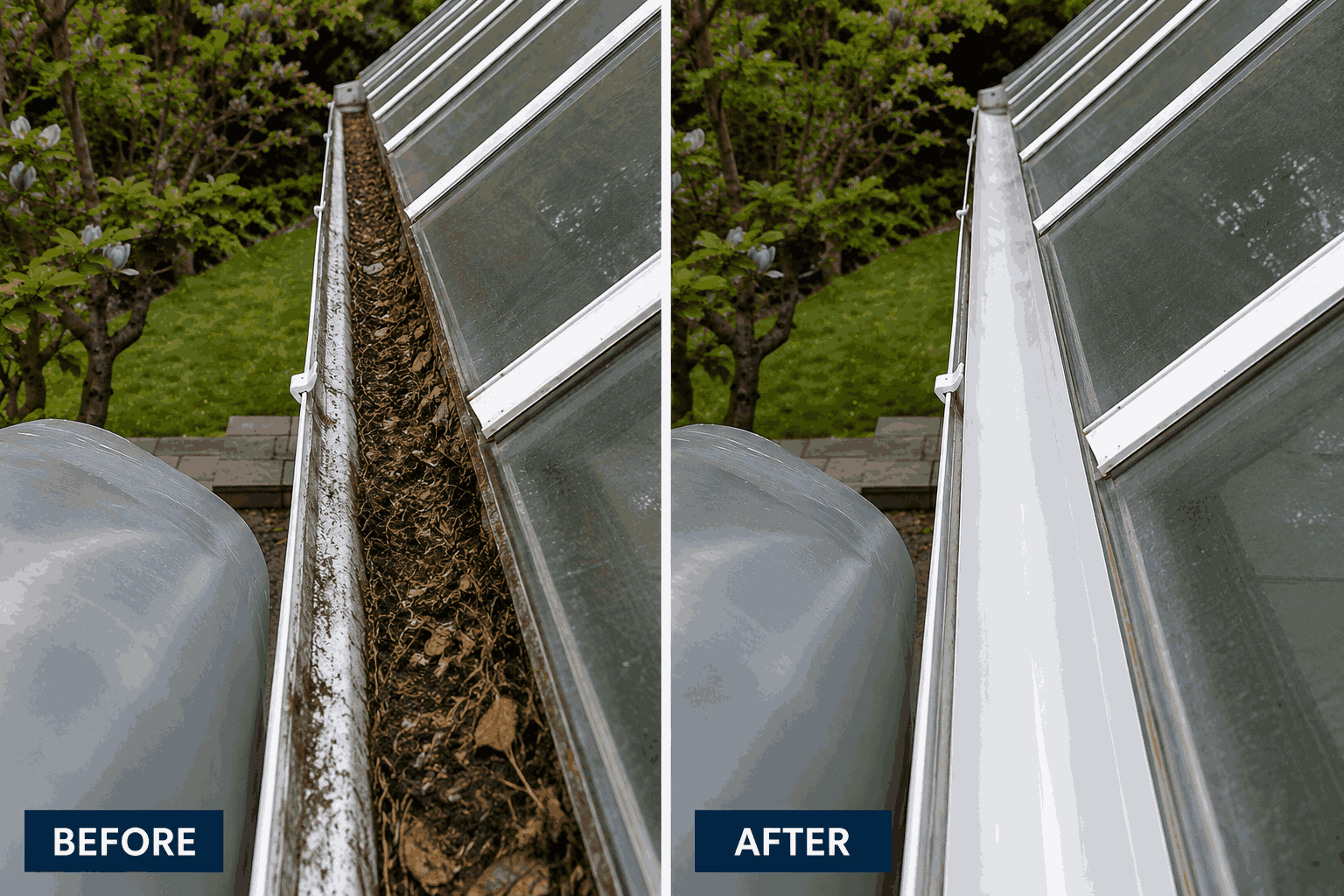
Why sustained localised downpipe saturation triggers Mercia Mudstone clay expansion and foundation movement.
Why “Hidden” Is the Right Word for This Kind of Damage
Almost every other gutter or downpipe problem shows itself somewhere visible eventually — staining on a wall, a damp patch on a ceiling, a sagging gutter line. Hidden damage doesn't follow that pattern. It builds in three places that are specifically difficult to see without deliberately looking:
Below Ground
Around structural foundations, footings, and underground drainage runs where saturated soil expands and washes away.
Behind Brickwork
In cavity wall ties, sub-surface brick courses, and mortar joints below damp-proof course (DPC) level.
Under Floors
In subfloor voids, wall plates, and timber joists that only get inspected during unrelated renovation work.
Solihull's Ground Conditions Make This a Genuine Local Factor
This is the part most generic gutter advice never mentions, because it genuinely doesn't apply everywhere equally. Much of central and southern Solihull — including areas around Shirley, Olton, and Elmdon — sits on Mercia Mudstone, a red clay historically known as Keuper Marl.
According to geotechnical engineering assessments of the wider region (such as research documented by Northpoint Geotechnical and regional geological surveys recorded in The Geology of Birmingham by Bill Dargue), Mercia Mudstone is specifically noted as prone to heave and other ground movement issues, particularly where moisture conditions change. Clay soils of this type behave very differently depending on how wet or dry they are: they shrink measurably when they dry out, and swell again when saturated.
How Localised Downpipe Overflow Interacts with Clay
A downpipe that's overflowing or discharging repeatedly onto the same fixed spot next to a building is doing exactly the thing that creates this kind of moisture inconsistency — one small area of ground staying consistently wetter than the soil around it, right next to the foundation. On a free-draining sandy soil, this is a nuisance. On a shrink-swell clay like the Mercia Mudstone found across large parts of Solihull, sustained, localised moisture differences of this kind are a recognised contributing factor that geotechnical professionals take seriously when assessing ground movement risk.
To be clear, this isn't a claim that every blocked downpipe on clay soil causes subsidence — the vast majority don't. It's a reason the underlying risk is genuinely higher in parts of Solihull than in areas built on more stable ground, which is exactly why “it's just cosmetic overflow” is a less safe assumption here than it might be elsewhere.
Not All of Solihull Sits on the Same Ground
Worth being precise about this rather than treating the whole borough as uniform: areas further out toward Dorridge, Knowle, and Hampton-in-Arden sit on different underlying geology, with more sandstone influence across parts of the borough's landscape according to Solihull Council's own landscape character assessment work.
Central & Southern Solihull (Olton, Shirley, Elmdon)
Dominated by Mercia Mudstone red clay. High shrink-swell capacity and sensitive to persistent water pooling at ground level.
Outer Fringes (Dorridge, Knowle, Hampton)
Sandstone-influenced ground. Drains more freely and is substantially less prone to clay heave, though standing water still damages mortar and subfloors.
This doesn't remove the value of keeping downpipes clear on these properties — standing water and overflow still cause the other forms of hidden damage covered below — but the specific clay-related subsidence risk is genuinely more relevant to properties across the borough's more clay-heavy central and southern areas than its sandier fringes.
Visual Evidence: Heavy Tree Cover Blockage & Ground Protection
Real West Midlands & Solihull residential tree debris extraction
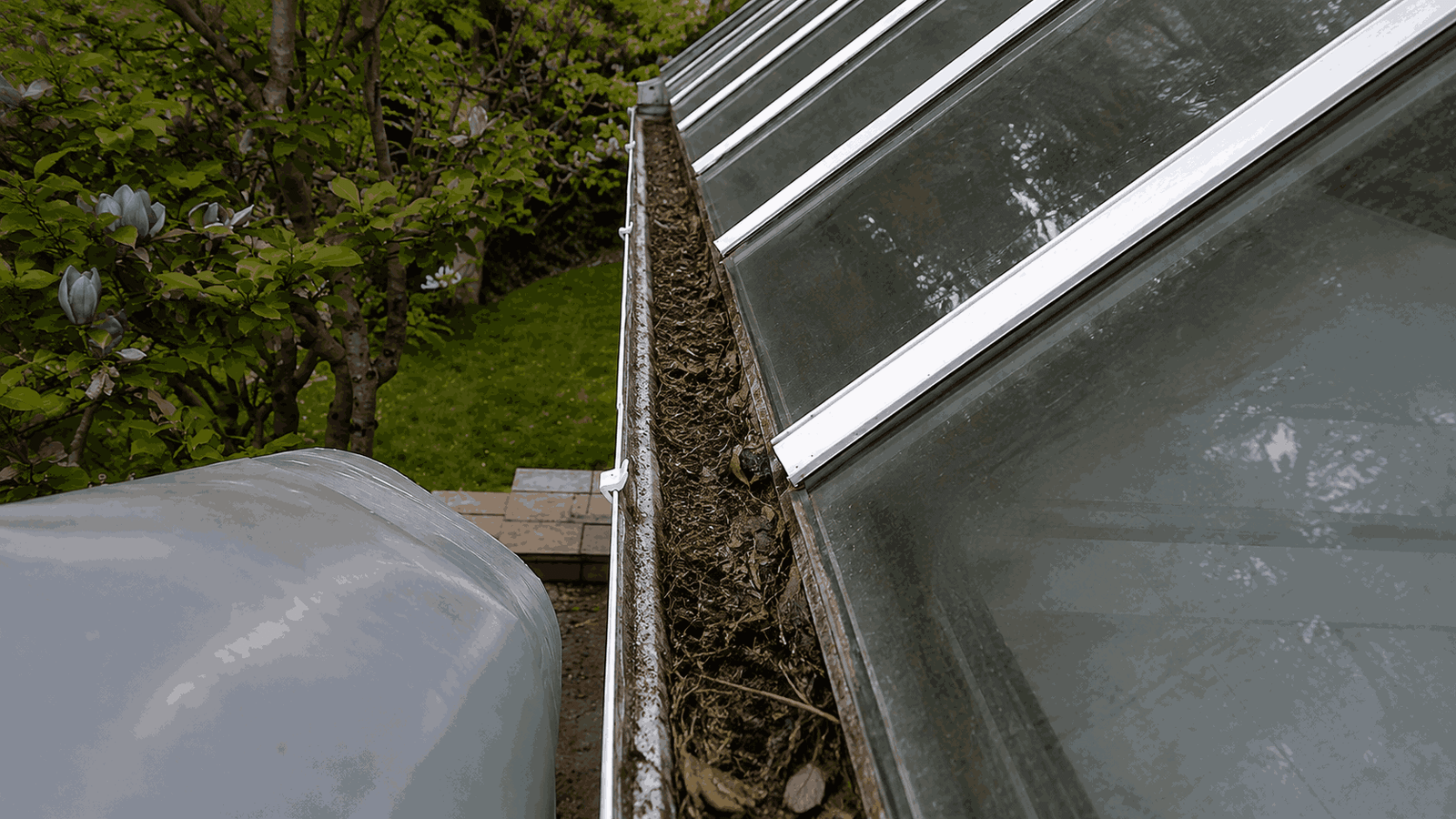
Dense autumn canopy foliage, decomposing twigs, and silt plugging the downpipe drop neck, forcing gallons of rainwater over the eaves.
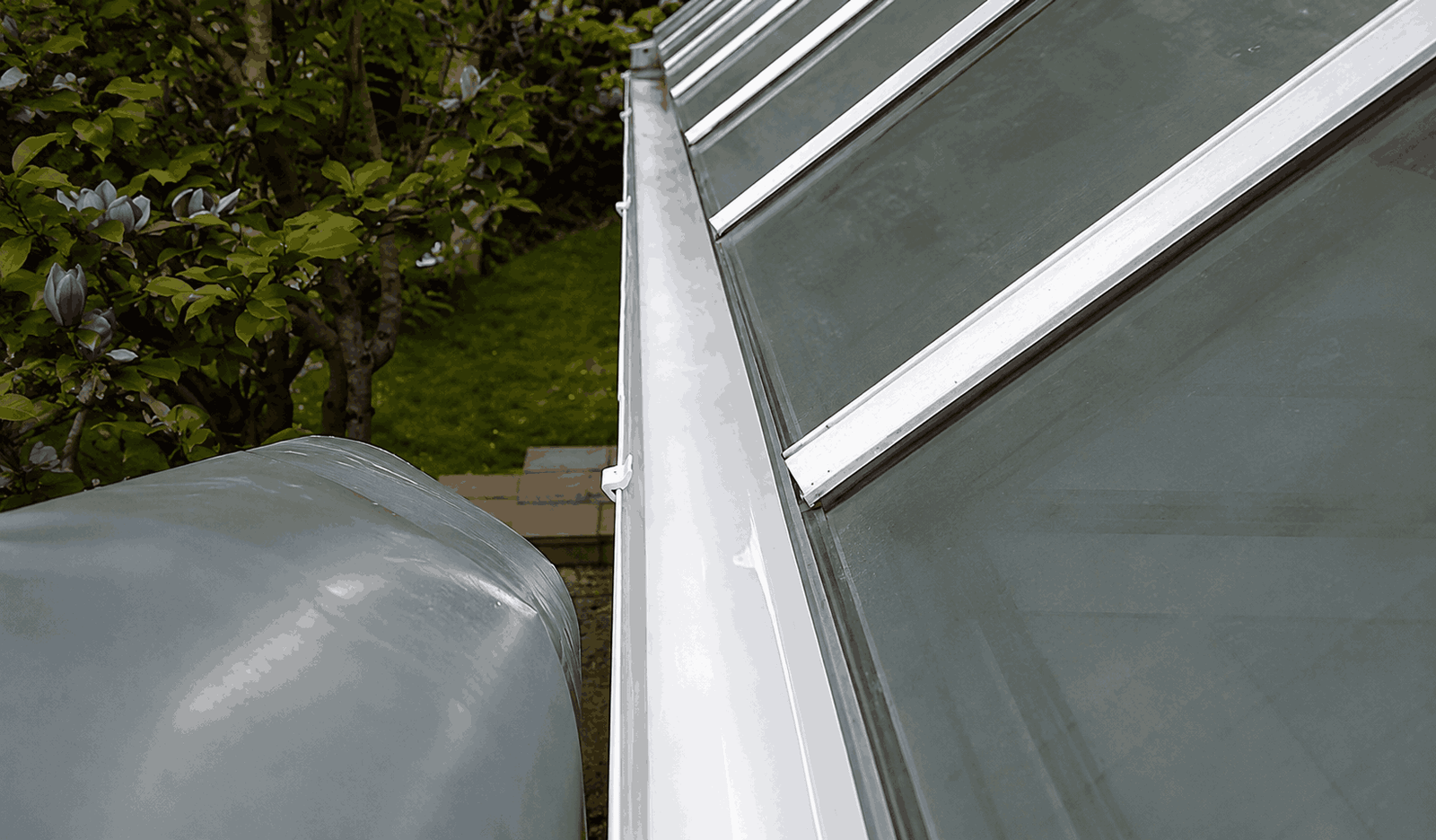
Completely evacuated channel and high-volume downpipe flow restored, directing all roof runoff cleanly into drainage.
The Damage Chain That Builds Beneath What You Can See
A persistently blocked downpipe rarely causes one single problem. It tends to progress through a fairly predictable sequence, each stage less visible and more costly than the one before it:
Localised Ground Saturation
Water spills constantly onto the fixed soil area where the downpipe drops, whether from a clogged neck, pipe fracture, or a blocked gully trap.
Mortar Erosion Below DPC Level
Brickwork below the damp-proof course stays in near-constant saturated contact rather than enjoying normal drying cycles, eroding lime and cement joints.
Damp Bridging into Subfloor Voids
On older properties with suspended timber ground floors, persistent external saturation migrates across masonry to the underside of the floor plate.
Timber Decay in Joists & Skirting
Fungal decay (wet rot / dry rot) takes hold in structural timbers — often the first five-figure consequence, discovered only during renovations.
Differential Clay Movement & Hairline Cracking
On Mercia Mudstone, uneven soil moisture causes micro-heave. Hairline diagonal cracks appear around ground-floor window and door frames nearest the pipe.
Drain-Related Subsidence & Soil Fines Washing
In long-neglected cases, broken underground pipe joints wash fine sediment out from under paths, patios, or foundation edges, leaving subterranean voids.
✓ Every single stage traces back to the same root cause: water that should have been carried away cleanly by the downpipe, and wasn't.
Where This Shows Up Across Different Solihull Property Types
The pattern looks slightly different depending on the kind of property involved:
1930s–1950s Semis (Olton & Shirley)
Often feature suspended timber ground floors and original clay underground drainage — the exact combination most vulnerable to damp-bridging and floor joist decay.
Detached & Mock-Tudor (Dorridge & Knowle)
Often sit on more stable ground, but feature complex multi-valley rooflines with 4–8 downpipes; an overlooked single pipe can cause localized rot without being noticed.
Modern Developments (Dickens Heath & Balsall Common)
Modern plastic drainage avoids root ingress, but a blocked or disconnected downpipe discharges thousands of litres of water next to shallow footings in exactly the same way.
Period Buildings (Solihull Town Centre)
Combines solid brick masonry and aging cast-iron drainage with zero scope for invasive underground digging without disturbing protected historic fabric.
Why This Is Genuinely Hard to Catch Early
Most of the warning signs covered in our detailed guide to spotting a blocked downpipe — standing water, a slow-draining gully, damp at the base of a wall — are the early signs. The genuinely hidden damage described here happens after those early signs have already been missed or ignored for some time, which is exactly why routine checking matters more than reactive checking once something looks obviously wrong.
A standard visual inspection from ground level, even a thorough one, cannot see mortar erosion below ground level, a subfloor void, or the condition of underground pipework. Confirming those requires targeted investigation — lifting flooring or a CCTV drain survey — which is specialist work well beyond routine gutter and downpipe clearing.
What This Means in Practice for a Solihull Homeowner
None of this is a reason for alarm over routine, well-maintained drainage — it's a reason to treat “the downpipe's not really doing anything” more seriously than it might get treated in an area with more forgiving ground conditions. In practice, that means:
- Include the downpipe every visit: Booking a downpipe check as part of every gutter visit, not treating it as optional or secondary to the visible gutter run.
- Don't ignore a slow gully: Not ignoring a gully that's slow to clear, even where it eventually drains, since a slow-draining gully still means prolonged localised saturation while it does.
- Monitor openings for hairline cracks: Being alert to any hairline cracking near ground-floor openings, particularly if it appears near a downpipe with a known drainage issue, rather than assuming it's cosmetic.
- Investigate recurring blockages: Getting a proper investigation, not just a surface clear, if a blockage keeps recurring despite regular maintenance.
When to Bring in a Structural or Drainage Specialist
A routine gutter and downpipe visit is the right response to debris-based blockages and general maintenance. It is not the right response — and shouldn't be treated as one — once any of the following are present:
At that point, a CCTV drain survey and, where structural signs are present, a structural engineer's assessment are the appropriate next steps — not further attempts at surface-level clearing.
What a Proper Underground Investigation Actually Involves
Once the signs above point toward something beneath the surface, “having a look” isn't really possible without the right approach. A genuine investigation typically involves:
1. CCTV Drain Survey
A small optical camera is fed through underground pipes to visually confirm cracks, root ingress, joint separation, or collapsed runs without any garden digging.
2. Subfloor Void Inspection
Lifting a section of flooring on suspended timber houses to inspect joists and wall plates directly where damp bridging is suspected.
3. Structural Engineer Assessment
Required where cracking or door sticking has appeared, to distinguish drainage-induced soil heave from unrelated thermal settlement.
4. Crack Width Monitoring
Installing tell-tale crack gauges over a period of weeks or months to determine whether movement is progressive or has stabilised.
None of this is something a routine gutter clearing visit can or should attempt to substitute for. The value of an honest maintenance provider in this situation is knowing where that line sits and saying so clearly, rather than either ignoring the signs or overstating what a surface-level clear can actually confirm.
Why the Cost Curve Gets Steep, Not Gradual
The escalating cost pattern with this kind of hidden damage isn't a smooth, gradual increase — it tends to jump sharply at specific points once the damage crosses from “maintenance” into “structural”:
Caught at Gully / Downpipe Stage
A routine clearing visit, priced like any other scheduled gutter call-out.
Caught at Mortar Erosion / Early Damp Stage
Repointing, DPC injection, and localised brick repair work — larger, but still manageable maintenance.
Caught at Timber Decay Stage
Subfloor joist, wall plate, or skirting replacement requiring lifting floors and specialized joinery.
Caught at Movement / Drain Subsidence Stage
Underpinning, drain relining, and major structural stabilisation — running well into five figures with heavy disruption.
The jump between the second and third stages, and again between the third and fourth, is where most homeowners are genuinely caught out — not because any single stage is unaffordable, but because each one is dramatically more expensive than the one before it, and the transition often happens silently, out of sight. See our full cost guide for how routine maintenance pricing compares to this.
The Insurance Angle This Overlaps With
This kind of gradual, maintenance-related damage connects directly to how UK insurers assess buildings insurance claims involving water damage or ground movement. Damage that's clearly built up over a long period of neglected drainage is treated very differently to a genuinely sudden event, which is exactly why catching this early — before it reaches the subsidence or structural stage — matters for more than just the repair bill itself.
This Pattern Applies Beyond Solihull, With Local Variation
The same underlying mechanism — localised water discharge interacting with the ground beneath a property — applies across Birmingham, Sutton Coldfield, Wolverhampton, Walsall, Dudley and West Bromwich as well, with the exact level of clay-related risk varying by the specific ground conditions in each area — much of Birmingham shares the same Mercia Mudstone geology as central Solihull, given how the two areas sit on the same wider geological plateau.
Related Reading in This Series
Frequently Asked Questions
Don't let a “minor” overflow become a structural conversation.
Book a full gutter and downpipe check across Solihull and the wider West Midlands, with an honest answer about what's causing any recurring problem.
✓ Full downpipe flushing · ✓ Gully check included · ✓ £5M Insured · ✓ Serving all Solihull & West Midlands Postcodes