
Leaking Gutter Repair Birmingham: Fix or Replace?
A leaking gutter puts homeowners in an awkward spot. Reseal it and hope, or replace the whole run and be done with it? Neither answer is right every time, and a lot of the advice online defaults to one or the other without actually walking through how to tell which situation you're in.
This guide sets out where gutter leaks actually come from, which repairs genuinely last and which are only ever temporary, and the specific signals that mean repair has stopped being worth it. The short version: material, age, and how many separate points are failing at once decide the answer far more than the size of the leak itself.
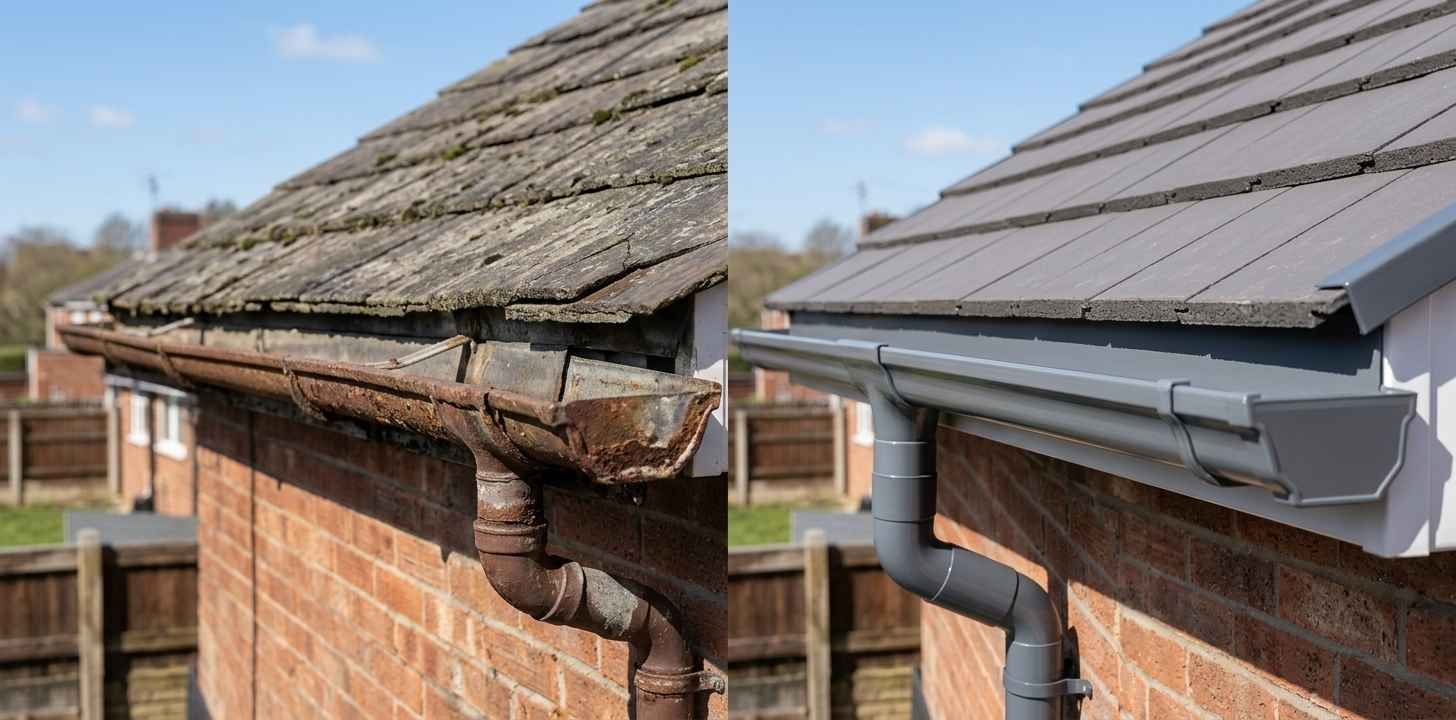
Detailed roofline inspection of union seals, bracket stability, and gutter body integrity on West Midlands properties.
Where Gutter Leaks Actually Come From
Not every leak has the same cause, and the fix depends entirely on which one applies:
1Joint seals degrading over time
The most common source, particularly on uPVC where the rubber seal at each union can harden and shrink over the years.
2Cracks or splits in the gutter body itself
Different from a joint failure, and considerably harder to fix permanently, since the material itself is compromised rather than just the seal between two sections.
3Corrosion holes on metal guttering
Cast iron in particular can develop a genuine hole through rust, which looks similar to a joint leak but has a completely different underlying cause.
4A bracket that's loosened or moved
Pulling the gutter slightly out of alignment and opening a gap at a joint that was previously sealed properly.
5Water finding the weakest point under pressure
Rather than a seal failure at all, covered in more detail below, since this is the cause most DIY repairs miss entirely.
The Diagnostic Step Almost Everyone Skips
Before resealing anything, it's worth asking a question most repair guides jump straight past: is this actually a seal failure, or is water being forced out because it can't get away fast enough? A gutter that's part-blocked, or feeding a downpipe that isn't draining properly, builds up pressure during heavy rain, and that pressure finds the weakest point in the system — often a joint that was perfectly sound until the water behind it had nowhere else to go.
Resealing that joint without addressing the underlying flow problem is treating the symptom. The leak will simply return, usually at the same spot, because the actual cause was never touched. A proper repair starts with confirming the gutter and downpipe are genuinely clear before assuming the joint itself has failed.
Repair Options by Material — What Actually Works
Guttering material changes both what's likely to fail and what a lasting repair looks like:
uPVC Guttering
The most common material on UK homes, and the most repairable for joint leaks specifically — a proper external-grade silicone sealant, or a purpose-made uPVC gutter sealant, applied to a clean, dry joint can restore a watertight seal for a reasonable number of years. What uPVC repair can't fix well is a genuine crack or split in the gutter body itself, which needs the affected section replaced rather than patched over.
Cast Iron Guttering
Common across Birmingham's Victorian terraces, and worth repairing where the ironwork itself is sound, since cast iron can last a century or more with proper care. The specific point worth knowing: silicone sealant is the wrong choice here — it peels away from cast iron because it can't flex with the metal's thermal expansion the way a butyl rubber sealant can, which is specifically recommended for period ironwork. A crack in the cast iron body itself, as opposed to a joint, generally can't be patched effectively and needs the section replaced. Rust holes are corrosion, not a seal problem, and sealant won't fix them either.
Aluminium & Seamless Systems
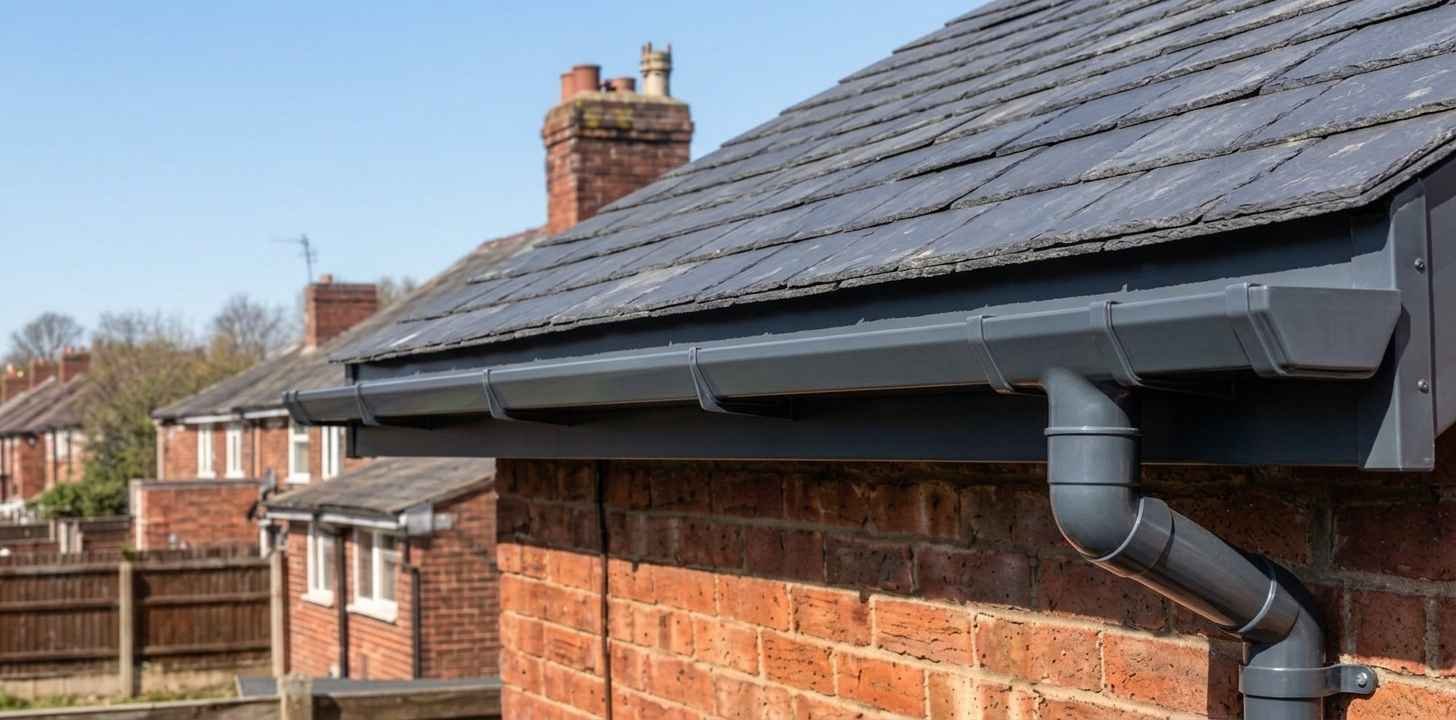
Butyl rubber or polyurethane mastic sealants work well here, and aluminium generally has moderate success with patching compared with cast iron. One genuine advantage worth knowing: seamless aluminium guttering, formed on site from a continuous coil rather than assembled from separate lengths, has no joints at all except at corners and outlets — which removes most of the leak risk that affects jointed systems entirely.

What Counts as a Lasting Repair, and What's Only Ever Temporary
This distinction matters more than most people realise when comparing quotes or deciding whether to DIY:
Self-adhesive gutter repair tape
Genuinely useful as an emergency measure, but only ever a stopgap, typically holding for a matter of months up to around a year, sometimes less in an exposed position.
Sealant applied to a joint
A semi-permanent fix when the right sealant is used on a clean, properly prepared surface, generally lasting somewhere in the region of two to five years depending on quality and application.
New joint connectors, unions, or seals
The closest thing to a permanent fix for a joint-specific leak, since the actual failed component is replaced rather than patched over.
Section replacement
The correct answer for a genuine crack, split, or corrosion hole, since no sealant or tape restores structural integrity to damaged material.
If a repair keeps needing to be redone every few months, it's usually because a temporary fix was used where a lasting one was needed, not because gutters are inherently unreliable.
When Repair Genuinely Stops Being the Right Answer
A few specific signals reliably point toward replacement rather than another round of resealing:
- Multiple joints failing at once, rather than a single isolated leak — this suggests the whole run's seals are reaching end of life together, not that one joint had bad luck.
- Widespread rust or corrosion, rather than a single spot — on cast iron especially, this indicates the material itself is degrading, not just one weak point.
- Sagging sections, which indicate a structural or bracket issue that sealant does nothing to address.
- The same leak returning after being properly repaired, once flow issues have genuinely been ruled out — at that point, the material itself is likely the problem.
- Frequent blockages traced back to structural damage rather than debris, since a warped or misaligned section will keep catching debris regardless of how often it's cleared.
Independent trade guidance is consistent on a useful rule of thumb here: if repair costs approach roughly half of what full replacement would cost, replacement typically represents better value, since it resolves every failure point at once rather than paying repeatedly to chase individual leaks along the same ageing run.
What the Numbers Actually Look Like
Repair costs for an isolated leak are genuinely modest — a tube of proper gutter sealant typically runs somewhere in the £8 to £15 range, replacement union brackets a few pounds each, and a basic DIY repair kit around £25 to £40, before accounting for access equipment on anything above a single storey. Full replacement sits in a different bracket entirely: UK guides put a complete gutter replacement at roughly £30 to £60 per linear metre, which works out to somewhere around £400 to £1,500 for a typical residential property depending on size and material, with a standard semi-detached uPVC job often landing between £600 and £1,000, and aluminium running higher, often £1,000 to £1,600, reflecting its longer lifespan.
The maths genuinely favours repair for one or two isolated joint leaks on an otherwise sound system. It shifts firmly toward replacement once several sections need attention at the same time, since the cost of repeatedly patching individual points can quietly add up to a meaningful fraction of a full replacement, without ever actually solving the underlying age of the system.
Age as a Guide, Not a Verdict on Its Own
Material lifespan gives a useful starting point, but it's a guide rather than an automatic answer:
uPVC: 15 to 25 years
A system approaching or past 20 years old is worth a closer inspection for brittleness, discolouration, and joint condition — these are far more informative than the age number alone, but a uPVC system at this age showing several of them is generally better replaced than repeatedly patched.
Aluminium: 25 to 40 years
A 20-year-old aluminium system likely has decades of useful life left and is a strong candidate for repair rather than replacement.
Cast Iron: 50 to 100+ years
Can last a century or more with regular repainting and maintenance, which is exactly why Victorian ironwork across Birmingham is so often worth repairing rather than replacing.
Steel: 20 to 25 years
Typically needs replacing every 20 to 25 years, being more prone to corrosion than aluminium without the right protective finish.
None of these figures are guarantees — poor installation, standing water, or years of neglected maintenance can shorten any material's realistic lifespan considerably, which is why the condition signals above matter more than the calendar age on its own.
Conservation Areas and Period Properties
For a genuinely damaged cast iron section on a property in one of Birmingham's Victorian conservation areas, replacement isn't necessarily a straightforward swap to modern uPVC. Conservation area rules frequently require a like-for-like profile when cast iron needs replacing, though a cast aluminium replica of the original profile is widely accepted as a suitable, lower-maintenance modern alternative. This is worth factoring into the repair-versus-replace decision earlier rather than later, since it affects both the cost and the timeline of a full replacement on these specific properties.
DIY Repair vs Calling a Professional
Some of the repairs above are genuinely reasonable for a competent homeowner to attempt; others are not, and the difference matters more than most DIY guides admit.
Reasonable to Attempt Yourself (Single Storey):
- • Cleaning and resealing an accessible joint with correct sealant
- • Replacing a union bracket or seal where parts match
- • Applying emergency repair tape as a short-term stopgap
Better Left to a Trade Professional:
- • Anything above single storey due to working-at-height safety
- • Diagnosing flow/pressure issues vs genuine seal failures
- • Cast iron repairs where incorrect sealant damages sections
- • Full section replacements requiring correct fall alignment
A DIY attempt that goes wrong on cast iron in particular can be genuinely costly — cracking an old joint while trying to force a repair, or stripping the protective paint layer while cleaning it for resealing, can turn a straightforward fix into a full section replacement.
A Few Persistent Myths Worth Clearing Up
“Any sealant will do in a pinch.”
The wrong sealant for the material is one of the most common reasons a DIY repair fails within weeks rather than years — silicone on cast iron is the classic example.
“If it's leaking, the whole thing must be failing.”
Not necessarily. A single joint leak on an otherwise sound system, of any material, is very often an isolated repair rather than a sign the entire run needs replacing.
“Gutter repair tape is a proper fix.”
It's an emergency measure, useful for buying time before a proper repair, not a lasting solution in its own right.
“Replacing with uPVC is always the cheapest long-term option.”
It's the cheapest upfront, but with a shorter lifespan than aluminium or cast iron, the lifetime cost comparison isn't always as one-sided as the initial price suggests.
“A leak means the gutter is definitely the source.”
Water can travel some distance along the underside of a gutter before dripping, and a downpipe or flow issue elsewhere can force water out at a point that isn't actually where the problem sits.
A Simple Decision Framework
Pulling the sections above into a practical order:
- 1.Confirm the actual cause — rule out a blocked gutter or downpipe forcing water out at a weak point before assuming a seal has genuinely failed.
- 2.Count how many points are failing — one isolated joint points toward repair; several at once points toward replacement.
- 3.Check the material and its condition, not just its age — brittleness, corrosion, and cracking matter more than the calendar year of installation.
- 4.Compare realistic repair cost against the roughly 50% threshold — get an honest total for patching everything that currently needs it, and weigh that against a full replacement quote.
- 5.Factor in conservation status on period properties — since this can change both the cost and the material options available for replacement.
Does Fitting a Guard Reduce Future Leak Risk?
Worth a brief mention, since it's a natural follow-up question once a repair or replacement is done: gutter guards reduce debris buildup, and less debris means less standing water sitting against a joint or a corroding section over time, which can genuinely extend the practical life of a repair. What a guard doesn't do is fix an existing leak or strengthen a weakened joint — it protects going forward rather than resolving what's already there, so it's worth thinking of as a follow-on step after a repair or replacement rather than an alternative to one.
What to Ask About a Warranty on Either Option
Whichever direction the decision goes, it's worth asking a specific question about what's actually covered. A repair warranty should specify how long the specific fix is expected to last, given the material and method used, rather than a vague blanket assurance. A replacement warranty should distinguish between the guttering itself and the installation workmanship, since these can carry different terms, and it's worth knowing which applies if something goes wrong a few years down the line. A provider who can answer both of these clearly, specific to the actual work being quoted, is generally more trustworthy than one who offers only a general reassurance.
What This Looks Like Across Birmingham and the West Midlands
The mix of property ages across the region means this decision looks different depending on where a property sits in its housing stock's timeline. Victorian terraces across inner Birmingham and older parts of Solihull and Sutton Coldfield often still have their original cast iron, genuinely worth repairing given its potential lifespan. Mid-century and later suburban properties across Wolverhampton, Walsall, Dudley and West Bromwich more commonly run on uPVC installed from the 1970s onward, meaning a meaningful share of the region's uPVC guttering is now approaching or past the point where the age-related signals above are worth checking closely. Newer estates generally have younger uPVC or aluminium systems with plenty of useful life left, where an isolated leak is almost always a repair rather than a replacement decision.
Getting a Second Opinion Before Committing Either Way
Because the repair-or-replace decision genuinely depends on several factors at once — cause, material, age, and how many points are affected — it's worth asking a straightforward question before committing to either path: has the actual cause of the leak been confirmed, and is the recommendation based on the whole system's condition or just the one visible leak? A provider giving an honest, specific answer to that is worth trusting with the bigger decision; one jumping straight to “you need a full replacement” without explaining why is worth a second opinion.
Frequently Asked Questions
Related Reading in This Series

Why Victorian Homes in Birmingham Need a Different Gutter Cleaning Approach
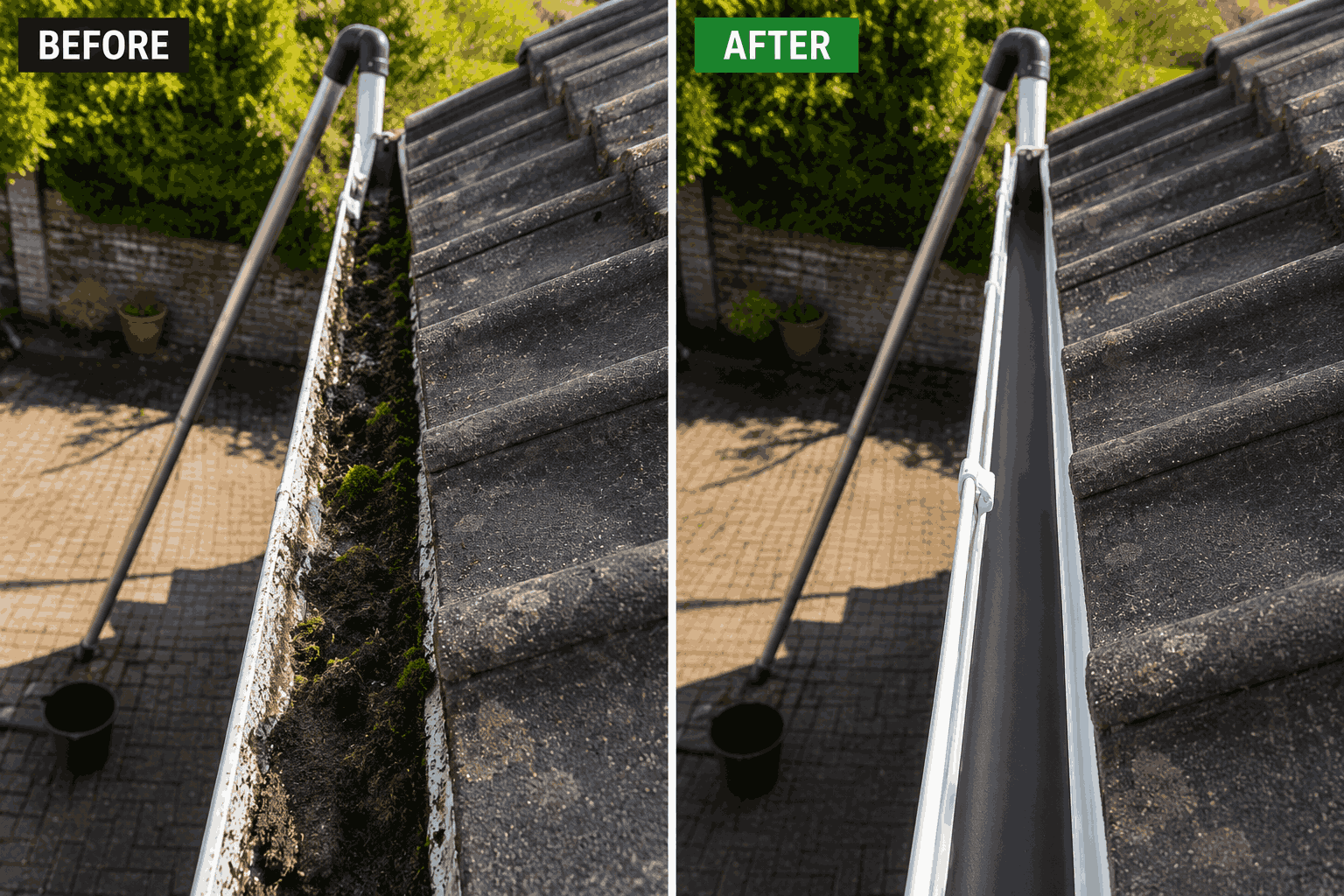
How Do You Know If Your Downpipe Is Blocked? Signs Birmingham Homes Show
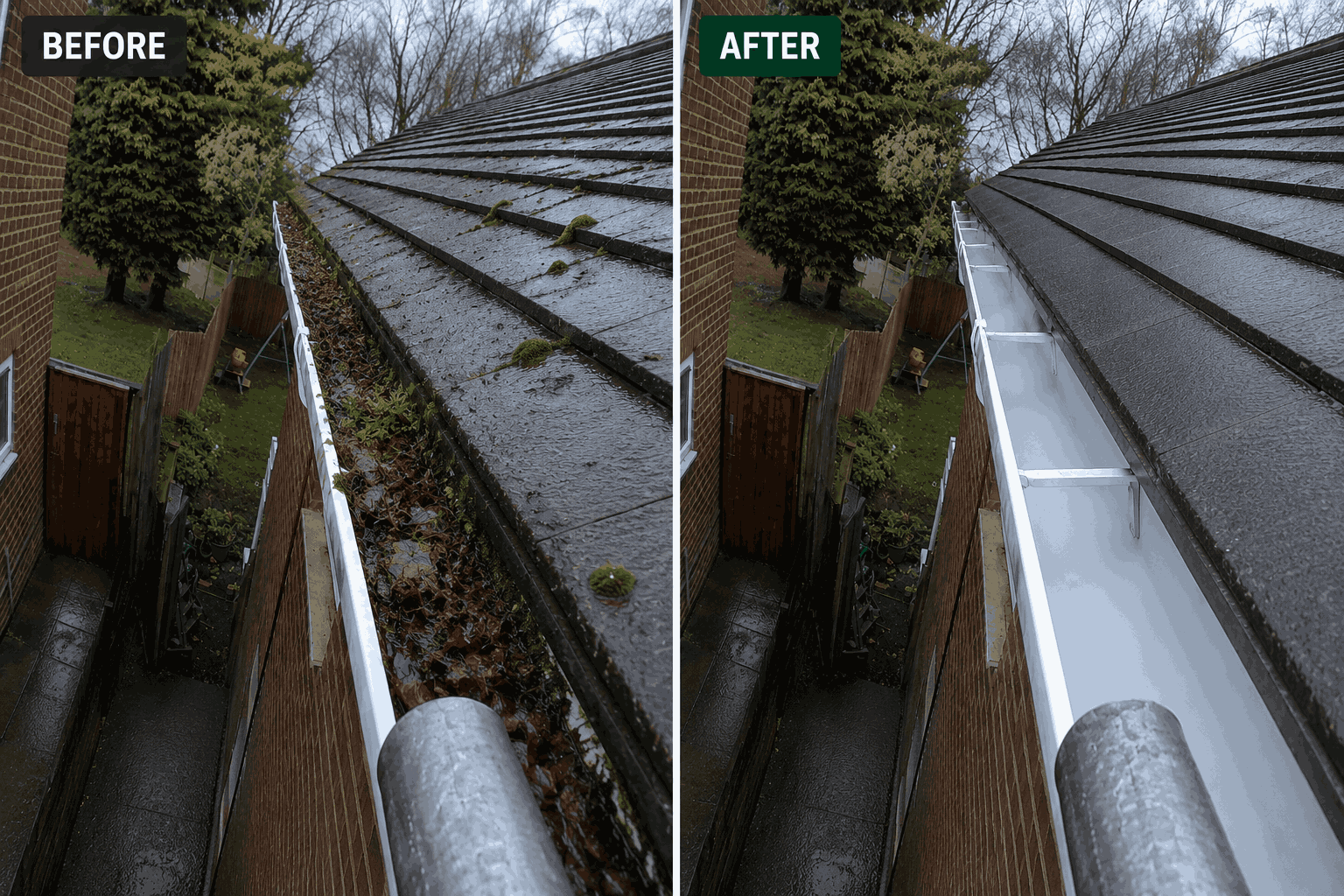
How Do You Know If Your Gutters Are Blocked? Birmingham Homeowner's Checklist

How Do You Stop Gutters From Blocking Again? A West Midlands Fix Guide

The One Question to Ask Before Hiring Any Gutter Cleaner in the West Midlands
How Much Does Gutter Cleaning Really Cost? A Straight-Talking Price Guide
Gutter Vacuum Cleaning Birmingham – No Ladders Needed
The Hidden Damage Behind Every Blocked Downpipe in Solihull
Get an Honest Answer, Not a Default Upsell
Book a full leak assessment across Birmingham and the West Midlands — we'll tell you plainly whether it's a repair or a replacement, with photos to back it up.