
Moss on a roof looks like a cosmetic problem. A green or black-brown fur creeping across the tiles, thicker on the shady side, heavier along the lower courses where water collects. For many houses that is all it is: a slightly untidy roof that does its job perfectly well.
But moss is rarely only about looks. It holds water against the tiles. It sheds into the gutter every time it rains or a bird picks at it. It can block the channels between interlocking tiles. And when a person decides to get rid of it, the way they do it can cause more damage than the moss ever did.
This guide is a fair, practical look at roof moss for homeowners, landlords and managers across Birmingham and the West Midlands. It explains what moss is and why roofs grow it, when it matters and when it can safely be left, how different removal methods compare (and which can damage a roof), why the gutters should be cleaned after the moss comes off rather than before, what is safe to do from the ground, what is a job for someone at height, how to protect wildlife and your garden, how to choose a firm and what to ask, and how to stop the moss returning.
It is written to be useful in any year. If you want the gutters cleaned from the ground with no ladders and a clear report on the state of the roof edge, you can call 0333 8804129 or request a free quote online.
A Word on Honesty First
Moss removal is a service many people sell hard, so it is worth starting with the honest position. Roof manufacturers do not agree that every mossy roof needs treatment.
Marley, a major UK tile and roofing manufacturer, says in its guidance on removing moss and lichen that low to moderate growth is usually harmless and that, unless the roof is leaking or the gutters are blocked, it is best to "leave the moss/lichen where it is and not to access the roof to remove it". See the Marley guidance on removing moss or lichen .
Wienerberger, another leading roofing manufacturer, takes a somewhat different emphasis. It points out that moss "absorbs moisture and retains it even after rainfall has stopped", and that moss in the joints can "block the interlocking channels", which may let water reach the sub-roof. See Wienerberger's advice on cleaning mossy roof tiles .
Put together, the sensible view is this: a light covering is mostly a cosmetic issue, while a thick covering that clogs tile joints or fills your gutters is a maintenance issue. Which one you have is the question to answer before you pay anyone to do anything, and an honest firm will tell you if the answer is "leave it".
How This Guide Fits With Our Other Articles
- Our guide to roofline cleaning in Birmingham covers the gutters, fascias and soffits as one system.
- Our guides to leaves in gutters and gutters full of weeds and seeds explain what organic debris does once it lands in the gutter trough.
- Our roof cleaning and moss removal service page is where you go to book service.
- This guide is about the moss itself: what it is, when it matters, how it is dealt with, and how gutters fit in.
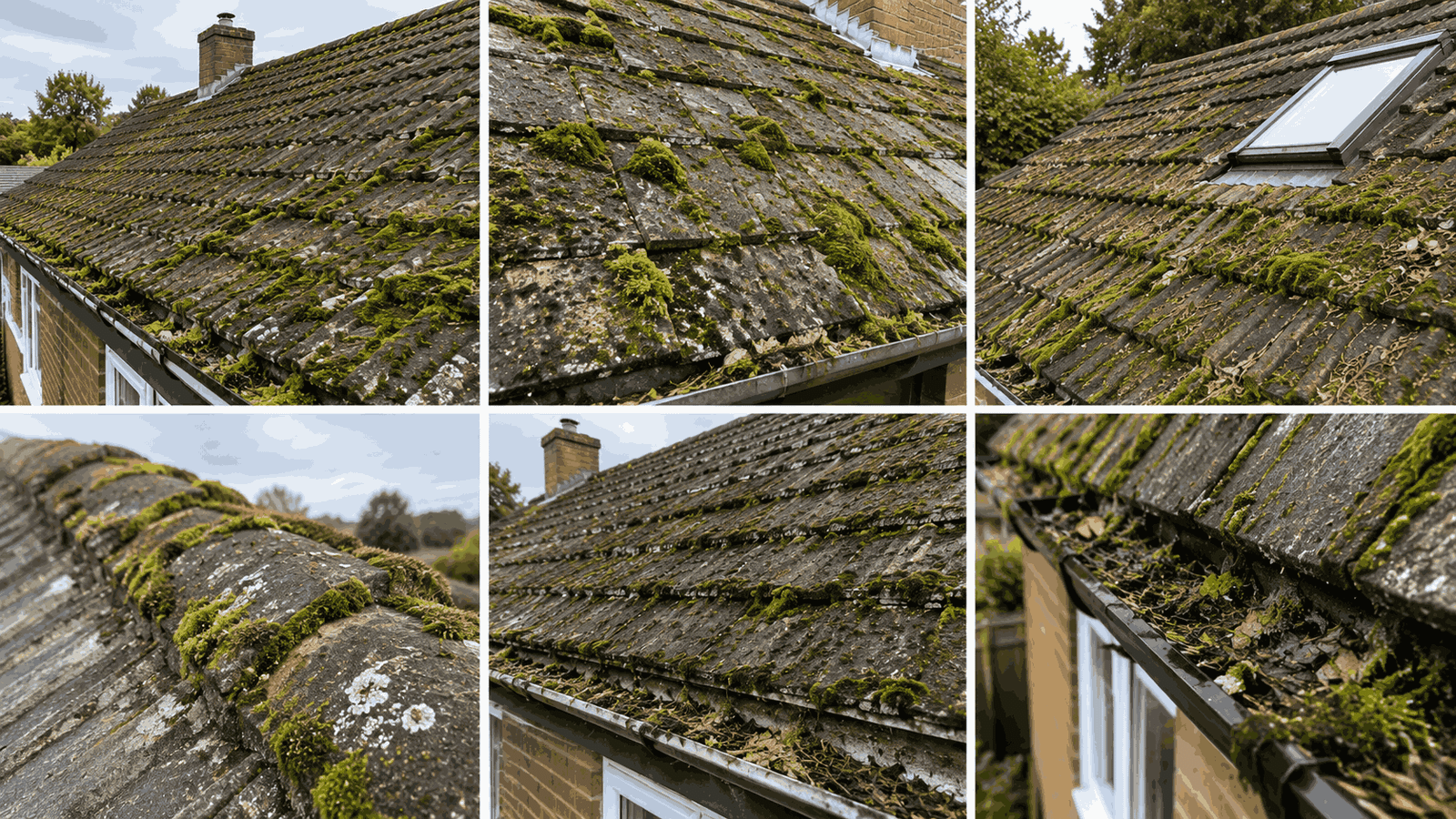
What Moss Is, and Why Roofs Grow It
Moss is a simple plant with no true roots. It anchors itself to a surface with fine threads and absorbs water and nutrients directly through its leaves. It thrives wherever a surface stays damp, gets little direct sun and collects a thin layer of dust, pollen or decaying plant matter to feed on.
A roof can offer all of that. The conditions that encourage moss on roofs in Birmingham and the West Midlands, as elsewhere, are generally these:
This is general information, not a diagnosis of your roof. If you want to know what is growing on yours, a photograph from the ground is a good first step.
Does Moss Damage a Roof?
The honest answer is "sometimes, and slowly". Here is how the manufacturers' points fit together:
Light growth: Generally Harmless
According to Marley, a thin scattered film is primarily cosmetic. Removing it prematurely with heavy foot traffic can cause more harm to the tile surface than leaving it alone.
Heavy, thick growth: A Maintenance Issue
Moss holds water against tile surfaces long after rain has stopped. In freezing winter weather, that trapped water freezes and expands. It can also block the side interlocks designed to channel rainwater away, potentially driving water onto the felt underlay.
Moss in the gutter: The Clearest Harm
Moss dislodged by rain, wind, or foraging birds ends up in the gutter and downpipe, forming a dense, spongy mass that holds standing water, strains brackets and blocks downpipe outlets.
Hidden Damage & Tile Inspection
A thick carpet can conceal cracked, chipped, or slipped tiles underneath. Wienerberger advises checking for broken tiles during clearing and replacing them promptly.
The practical test is not "is there moss?" but "is it doing anything?" Is it thick? Is it in the joints? Is it choking your gutters? Is there damp or a leak? If no, you have time. If yes, it is worth dealing with.
Signs That Roof Moss Needs Attention
On the Roof (Binoculars/Zoom)
- Thick spongy clumps standing proud of tiles
- Moss collecting in valleys or around chimneys
- Moss wedged inside interlocking tile joints
- Lifting, slipped or cracked tiles visible
- Tiles that stay permanently dark and wet
In the Gutters (From Ground)
- Large clumps visible over the front rim
- Small tile grit or granules settling in trough
- Weeds rooting in moss beds along the run
- Water cascading over gutter front in rain
- Downpipe shoe choked with moss balls
Inside the House
- Stains on upper ceilings below roof pitch
- Damp patches on top-floor exterior walls
- Water marks or drips visible on loft timbers
- Musty odors in loft space after storms
Our guides to signs of clogged gutters and the blocked gutters checklist help you diagnose water overflow issues.
Why Gutters Should Be Cleaned AFTER the Moss Is Removed
This is the most critical practical sequence in roofline care, and it is why a combined service visit makes total sense.
When moss is scraped, brushed, treated or rinsed off a roof, it goes somewhere. Most of it drops directly into the gutter channel. If a roof is treated chemically, loosened moss continues to detach over subsequent weeks, washing down into the rainwater goods. If you clear the gutters first and deal with the roof afterwards, the gutters immediately refill with moss clumps and you are back at square one.
The Correct 6-Step Order of Work:
- Inspect: Survey roof, tiles, flashings and gutters from ground level to verify necessity.
- Deal with Roof First: Remove or treat roof moss using appropriate gentle access methods.
- Clear Gutters & Downpipes: Vacuum gutters clean from the ground once roof debris has fallen.
- Flow Test Outlets: Ensure no moss plugs remain wedged inside downpipe swan necks or shoes.
- Clean Fascias & Soffits: Wash roofline boards last to eliminate any treatment splatter.
- Photographic Report: Supply high-definition before and after camera photos to the homeowner.
Our gutter cleaning service clears gutters and downpipes from the ground using high-suction vacuums, as detailed in our guide to gutter vacuum cleaning in Birmingham.
Roof Moss Removal Methods Compared
There is no single right way to deal with moss. The method depends on tile material, age, pitch, and growth density:
| Method | How it works | Strengths | Limits & Risks |
|---|---|---|---|
| Leave it alone | Do nothing, monitor from ground | Zero tile risk; zero cost | Thick mats can hold water, block joints and fill gutters |
| Hand removal (trowel/brush) | Manual scraping on a dry day | Controlled; no water forced under tiles | Requires safe height access; foot traffic can crack tiles; slower |
| Low-pressure wash | Gentle rinse directed apex downwards | Quicker than dry hand scraping | Can still force water into interlocks if directed upwards |
| High-pressure jet washing | Blasting with high-PSI jet lance | Looks fast initially | Manufacturers strictly advise against it: strips tile finish, floods interlocks, washes out mortar |
| Chemical (biocide) treatment | Solution applied to kill moss and algae | Less physical tile contact; retards regrowth | Not permanent; run-off must be controlled to protect gardens & wildlife |
| Combination | Bulk manual scraping followed by biocide | Effective balance on heavily overgrown roofs | Requires experienced operators and controlled execution |
Visual Evidence: Birmingham Roof Moss & Gutter Clearance
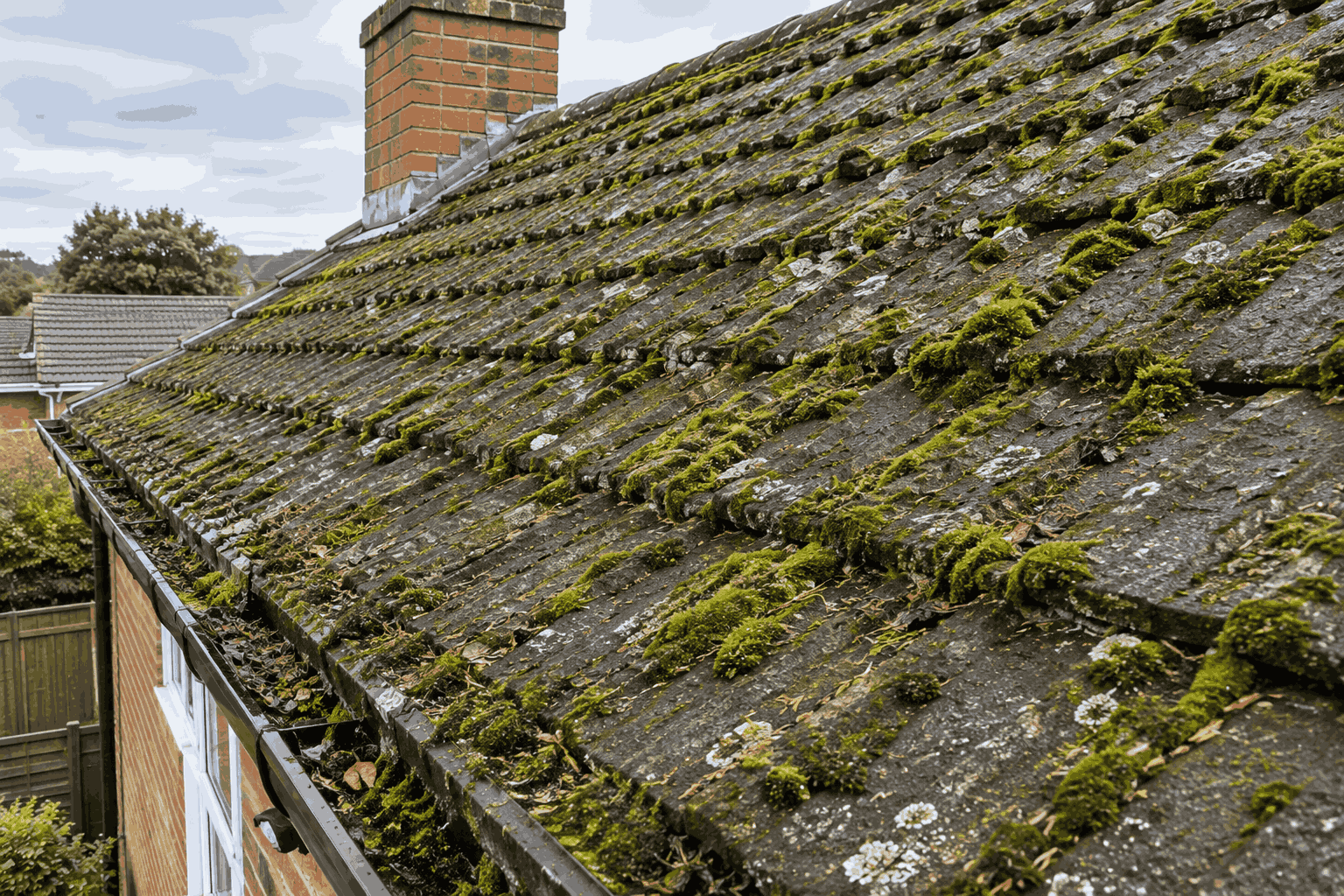 Before: Heavy Moss & Choked Gutters
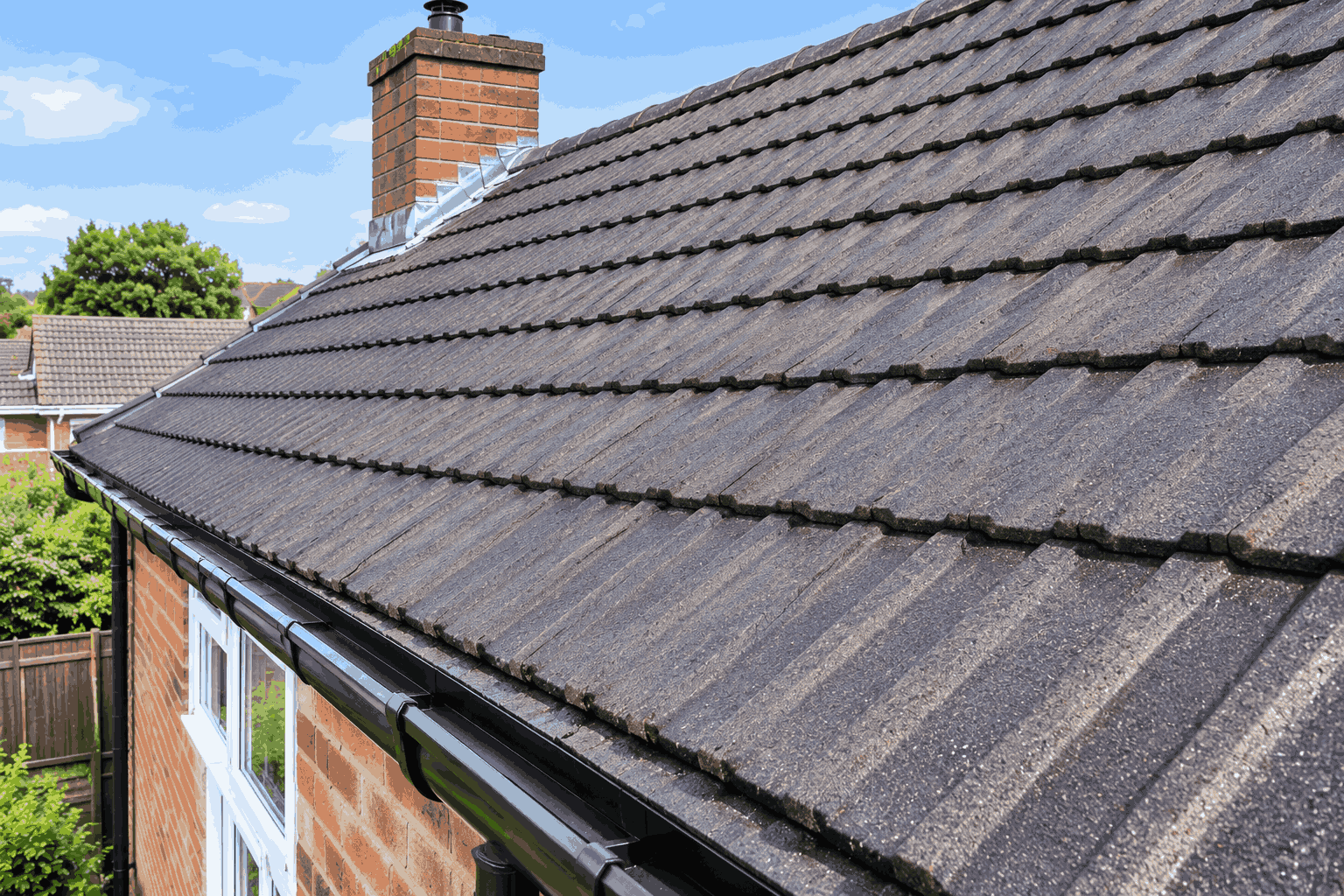 After: Roof Cleared & Vacuum Cleared
Hand Removal & Chemical Treatments Explained
Hand Removal: Wienerberger recommends using a handheld trowel or stiff hand-brush on a dry day. Skilled technicians set up safe access, protect gutter channels to catch falling moss, work strictly from top to bottom, and avoid walking directly on fragile tiles by using specialized roof crawling ladders.
Chemical (Biocide) Treatments: Biocides kill moss spores and algae down to microscopic level. However:
- They are not permanent: Wienerberger stresses that chemical treatments do not permanently alter roof climate. If nearby oak trees continue to cast shade, spores eventually recolonize.
- Run-off control is essential: As Marley highlights, wash water containing biocides can harm lawns, flowerbeds, and domestic pets. Downpipes must be isolated or run-off diverted during application.
- Dead moss still sheds: As treated moss shrivels and dies over 2–4 weeks, rain washes clumps down into the gutters, necessitating a follow-up vacuum check.
Why High-Pressure Jet Washing Is Extremely Dangerous
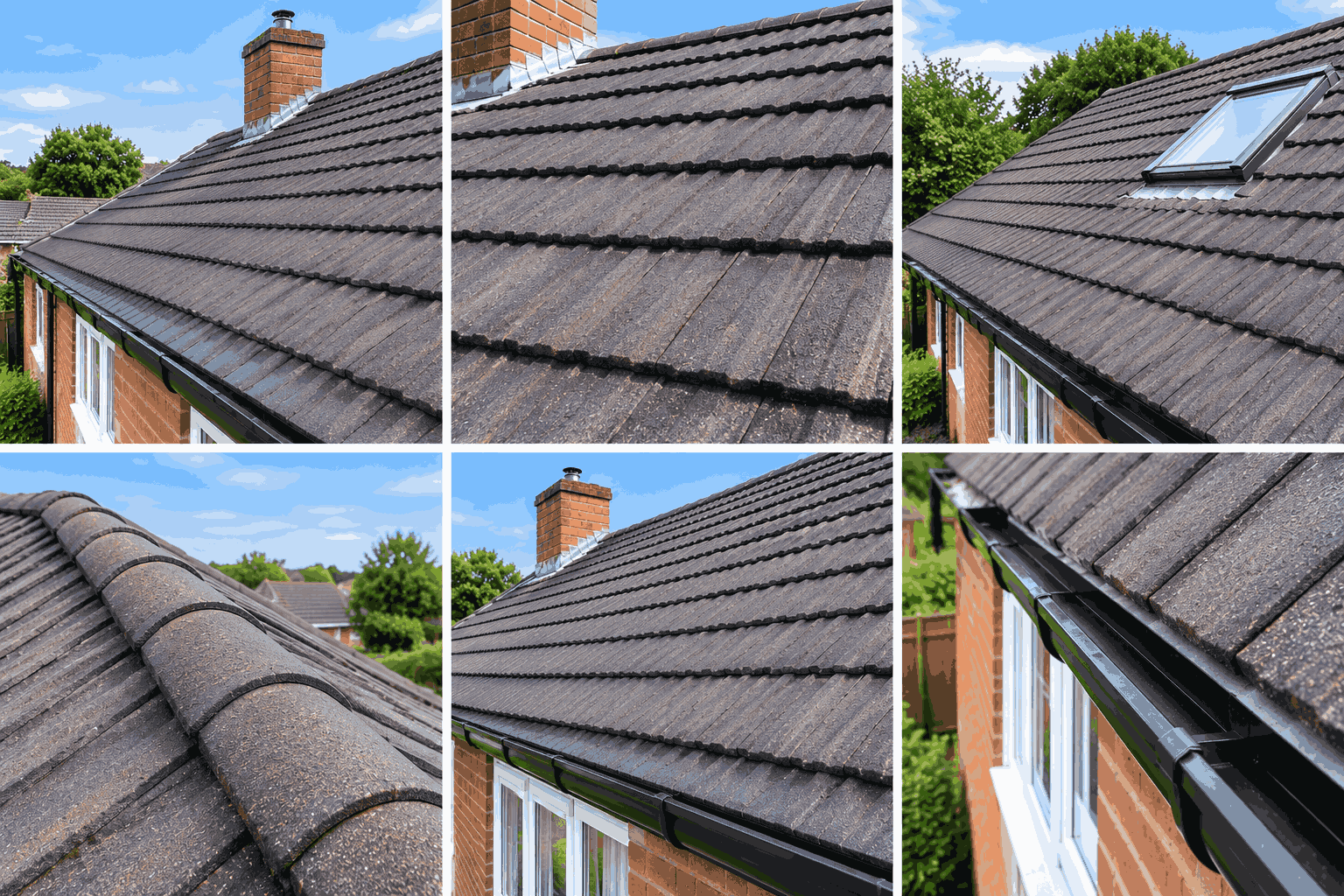
Bats, Nesting Birds and Wildlife Law
Roofs are wildlife habitats. UK wildlife protection laws apply strictly to domestic roof maintenance:
- Bats: Natural Resources Wales environmental guidance reminds that "all bat species are protected by law" and that disturbing a roost in a roof or outbuilding is a criminal offence. Across England and the UK, if bat droppings or roosting activity are discovered around eaves, tiles, or loft spaces, all roof work must cease immediately until advice is obtained from a licensed bat ecologist.
- Nesting Birds: Under the Wildlife and Countryside Act 1981, all active wild bird nests are protected. Roof moss removal and gutter work must not disturb active nests with eggs or chicks. Responsible contractors will inspect eaves and postpone work until chicks have fledged.
A responsible contractor will inspect for wildlife signs before setting up equipment and will never pressure you to disregard wildlife laws.
What Moss Debris Does Once It Reaches Your Gutters
Reading a Quote for Roof and Gutter Work
We don't publish flat price lists because every roof differs by pitch, tile age, tree proximity, and storey height. Here is what every transparent quote should contain:
| Quote Item | What It Should State | Why It Matters |
|---|---|---|
| Property | Full address, roof pitch, tile type | Confirms technician inspected the exact premises |
| Method | Manual scrape, low-pressure wash, biocide | Protects tiles by confirming no high-pressure jetting |
| Access | Ground suction, roof ladder, tower | Clarifies safety compliance and lawn impact |
| Run-Off | Protection of garden plants, ponds, cars | Prevents chemical damage to domestic landscaping |
| Gutters | Cleaned AFTER roof work + downpipes tested | Stops dislodged roof moss clogging pipes |
| Fascias & Soffits | Stated clearly as included or separate | Avoids misunderstandings regarding scope |
| Debris Disposal | Bagged and removed from site | Leaves driveways and flowerbeds clean |
| Photographs | High-definition before and after camera shots | Independent visual verification |
| Insurance | Public liability policy details | Protects your property against accidental damage |
| Price & Payment | Fixed total with VAT noted, paid after completion | Protects against rogue doorstep deposits |
Read our guide to gutter cleaning costs in Birmingham and the one question to ask before hiring any gutter cleaner.
Unsolicited Callers and Doorstep Roof Scares
Roof moss is a notorious hook for doorstep rogue traders who cold-call claiming they "noticed moss that will cause your roof to collapse this winter" and offer to blast it with a pressure washer for cash.
Trading Standards advice from councils across the UK is completely unequivocal: do not agree to work on the doorstep. Southwark Council's Trading Standards consumer guidance advises: "We advise that you don't answer the door to anyone you're not expecting - but if you do, just say no." It warns against making sudden decisions at the door and notes that pressure jetting frequently causes immediate roof leaks. See Southwark Trading Standards rogue trader guidance .
Always initiate the contact yourself, demand written terms, and review our dedicated advice on gutter cleaning for elderly homeowners.
Insurance Policies and Gradual Deterioration
This is general information, not financial advice.
As an example of standard UK insurer wording, Ageas's guidance on what is not covered by home insurance specifically excludes "damage caused by wear and tear or gradual operating causes", citing "blockage or cracking of guttering causing damp walls" as non-insurable maintenance failure.
Keeping photographic logs of regular gutter vacuuming and roofline maintenance protects you if you ever need to make a storm-related claim. See our guide to gutter maintenance and home insurance.
Roof Moss & Gutter Care Across Birmingham and the West Midlands
Birmingham & Urban Terraces
Victorian & Edwardian terraces with slate or clay tiles and shared party gutters in Harborne, Moseley, Edgbaston and Kings Heath.
Solihull
Substantial detached residences surrounded by mature oaks and pines, where moss growth is accelerated by heavy canopy shade.
Sutton Coldfield
Tree-lined residential roads and bungalows adjacent to parkland, requiring annual gutter suction to clear moss fall.
Wolverhampton & Walsall
Varied interwar housing stock and industrial units. Councils enforce strict Tree Preservation Orders in conservation areas.
Dudley & West Bromwich
Sloping Black Country topography where unmanaged gutter overflow soaks shared brickwork boundaries.
Tree Regulations (TPOs)
Always verify with Wolverhampton or Walsall councils before pruning overhanging trees.
What We Will and Won't Promise
What We Will Do
- • Clean gutters and downpipes from ground level with industrial suction.
- • Provide high-definition before and after camera inspection photos.
- • Give honest upfront advice on whether your roof moss genuinely needs treating or should be left alone.
- • Bag, remove and responsibly dispose of all organic moss waste.
- • Provide transparent fixed upfront quotes with zero hidden fees.
- • Hold comprehensive Full Public Liability Insurance for your peace of mind.
What We Won't Do
- • We will never cold-call, knock on doors, or use scare tactics about collapsing roofs.
- • We will never recommend aggressive high-pressure jet washing that damages tiles.
- • We will not make false claims that roof moss will never return in decades.
- • We do not demand large advance cash payments.
What we can't promise: We cannot promise that moss will never return to a roof, because natural humidity, prevailing winds, and overhanging tree shade will continually deposit organic spores. When roof tiles are severely deteriorated or structural timbers are rotted, we will advise consulting a certified roofing contractor.
Key Takeaways for Homeowners
- Light moss is harmless: As manufacturer Marley notes, minor moss is cosmetic. Do not pay for aggressive removal unless tiles are choked or gutters are blocked.
- Never pressure wash: High-pressure lances strip tile glazes and drive water under lap joints, causing expensive interior ceiling leaks.
- Sequence is vital: Always remove roof moss before vacuuming gutters; otherwise, loosened moss will refill newly cleared gutters within days.
- Check from the ground: Ground-based high-reach vacuums safely extract moss and grit from gutters without placing dangerous ladders against your roofline.